


OpenClaw AI Automation: Advanced Anomaly Detection and Automated Incident Management for Business Continuity (Part 15)
March 16, 2026
OpenClaw AI Automation: Advanced Anomaly Detection and Automated Incident Management for Business Continuity (Part 15)
March 17, 2026Introduction
As businesses increasingly rely on AI automation platforms like OpenClaw to streamline workflows, security and compliance become critical pillars to maintain trust and operational integrity. In this Part 16 of our series, we explore how to integrate AI-driven security and compliance monitoring directly into your WordPress and hosting environments using OpenClaw agents. This approach not only enhances threat detection but also automates compliance checks, significantly reducing manual oversight while ensuring regulatory adherence.
Why Integrate AI-Driven Security and Compliance in OpenClaw?

Traditional security monitoring often relies on manual audits, periodic scans, or reactive incident response. OpenClaw’s AI capabilities provide opportunities to embed continuous, real-time security intelligence and compliance verification by leveraging AI agents that can analyze logs, detect anomalies, and enforce policies automatically.
- Proactive Threat Detection: AI agents can identify unusual patterns, suspicious activity, or zero-day threats faster than rule-based systems.
- Automated Compliance Checks: Continuous verification against standards like GDPR, PCI-DSS, or HIPAA reduces risk of violations.
- Seamless Workflow Integration: Security monitoring becomes part of your existing OpenClaw automation pipelines, triggering alerts and remediation without interrupting business processes.
Core Components of OpenClaw AI Security & Compliance Integration
To build an effective AI-driven security and compliance framework within OpenClaw, focus on these components:
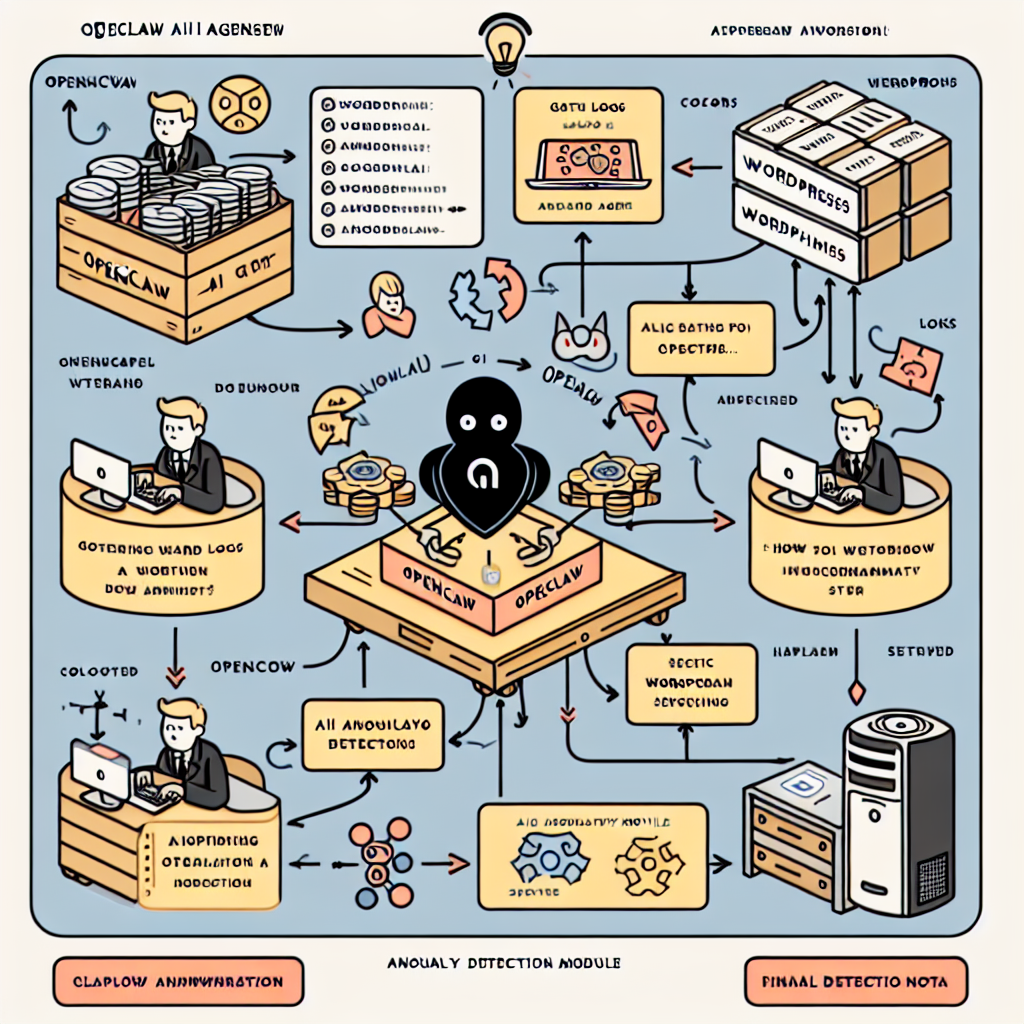
- Data Collection & Log Aggregation: Aggregate logs from WordPress events, hosting infrastructure, firewall, and network layers.
- AI-Powered Anomaly Detection: Use OpenClaw AI agents trained on normal system behavior to spot deviations indicating potential threats or compliance breaches.
- Policy Engine & Compliance Rules: Define compliance policies as codified rules within OpenClaw workflows, enabling automatic audits.
- Automated Incident Response: Enable OpenClaw agents to initiate remediation such as IP blocking, patch deployment, or notifying stakeholders.
- Dashboard & Reporting: Provide real-time visibility with AI-enriched dashboards and detailed compliance reports for audits.
Step-by-Step Implementation Guide
1. Setting Up Data Collection for WordPress and Hosting Logs
Begin by configuring centralized log collection for your WordPress environment and hosting infrastructure. This data feeds your OpenClaw AI agents with the telemetry needed for intelligent analysis.
- WordPress: Enable detailed logging using plugins like WP Activity Log or configure server-side logging for PHP errors, access logs, and audit trails.
- Hosting Environment: Aggregate system logs, firewall events, and network traffic logs using tools like syslog, Fluentd, or cloud provider logging services.
- OpenClaw Integration: Use OpenClaw’s data ingestion modules or API connectors to funnel this data into AI agents for processing.
2. Training OpenClaw AI Agents for Anomaly and Threat Detection
Leverage OpenClaw’s machine learning capabilities to train agents on normal operational patterns to establish a baseline. Techniques include:
- Unsupervised Learning: Use clustering or autoencoders to detect deviations in log data without labeled attack instances.
- Supervised Learning: Incorporate known threat signatures and labeled compliance violations to improve detection accuracy.
- Continuous Learning: Configure feedback loops so agents update models with new data and incident outcomes, refining detection over time.
3. Defining Compliance Policies and Automating Audits
Create compliance rules within OpenClaw workflows that automatically verify system states and log events against your regulatory requirements. Examples include:
- GDPR: Check for personal data access logs, encryption status, and data retention policies.
- PCI-DSS: Verify firewall configurations, access controls, and patch levels.
- HIPAA: Monitor user authentication logs and data transmission security.
OpenClaw agents can run scheduled audits and generate compliance reports accessible to business owners and auditors.
4. Automating Incident Response with OpenClaw AI Agents
When anomalies or compliance violations are detected, OpenClaw agents can initiate automated remediation workflows. Implementation examples:
- Threat Containment: Automatically block suspicious IP addresses or quarantine compromised endpoints.
- Patch Management: Trigger automated deployment of security patches to vulnerable systems.
- Notification & Escalation: Send real-time alerts via email, Slack, or WhatsApp to security teams and business managers.
5. Visualizing Security & Compliance Metrics
Create custom dashboards within OpenClaw or integrate with third-party SIEM tools to visualize security posture and compliance status. Key features include:
- Interactive charts showing incident trends and response times.
- Compliance scorecards highlighting pass/fail status per policy.
- Detailed logs and drill-down capability for forensic analysis.
Practical Example: Automating PCI-DSS Compliance for a WooCommerce Store
Consider a small business running WooCommerce on WordPress handling credit card payments. Maintaining PCI-DSS compliance is mandatory but complex. Here’s how OpenClaw AI automation simplifies this:
- Configure OpenClaw to collect firewall logs, WordPress access logs, and server patching status.
- Train AI agents to recognize normal traffic patterns and detect suspicious access attempts or firewall misconfigurations.
- Define PCI-DSS rules within OpenClaw that check for open ports, encryption usage, and access control violations.
- Set up automated remediation to close unauthorized ports and notify the system admin immediately.
- Generate monthly compliance reports automatically for audit readiness.
This automation reduces manual compliance overhead, improves security posture, and ensures continuous readiness for audits.
Best Practices and Considerations
- Data Privacy: Ensure AI agents handle sensitive data in compliance with privacy laws and encrypt data in transit and at rest.
- Model Transparency: Maintain logs of AI decisions and remediation actions for accountability.
- Human Oversight: Combine AI automation with human review for critical or ambiguous incidents.
- Regular Updates: Keep AI models and compliance rules updated with evolving threat landscapes and regulations.
Conclusion
Integrating AI-driven security and compliance monitoring into your OpenClaw automation framework empowers your business with proactive defense and streamlined regulatory adherence. By automating data collection, anomaly detection, compliance audits, and incident response, you reduce risk, save time, and maintain customer trust. This advanced integration is essential for any WordPress site or hosting environment aiming for resilient, compliant, and scalable operations.
Stay tuned for Part 17, where we will explore advanced AI-driven customer experience personalization using OpenClaw agents.