


OpenClaw AI Automation: Leveraging AI-Driven Predictive Analytics for Proactive Business Management (Part 14)
March 16, 2026
OpenClaw AI Automation: Integrating AI-Driven Security and Compliance Monitoring for WordPress and Hosting Environments (Part 16)
March 17, 2026Introduction
In this fifteenth installment of the OpenClaw AI Automation series, we delve into advanced anomaly detection techniques and automated incident management within business environments. As organizations increasingly rely on AI-driven workflows and automated systems, the ability to quickly detect irregularities and respond intelligently becomes critical for maintaining business continuity and customer satisfaction.

This article presents practical strategies and implementation details for using OpenClaw AI agents to monitor complex systems, identify anomalies, and trigger automated remediation or escalation workflows.
Understanding Anomaly Detection in OpenClaw AI Automation
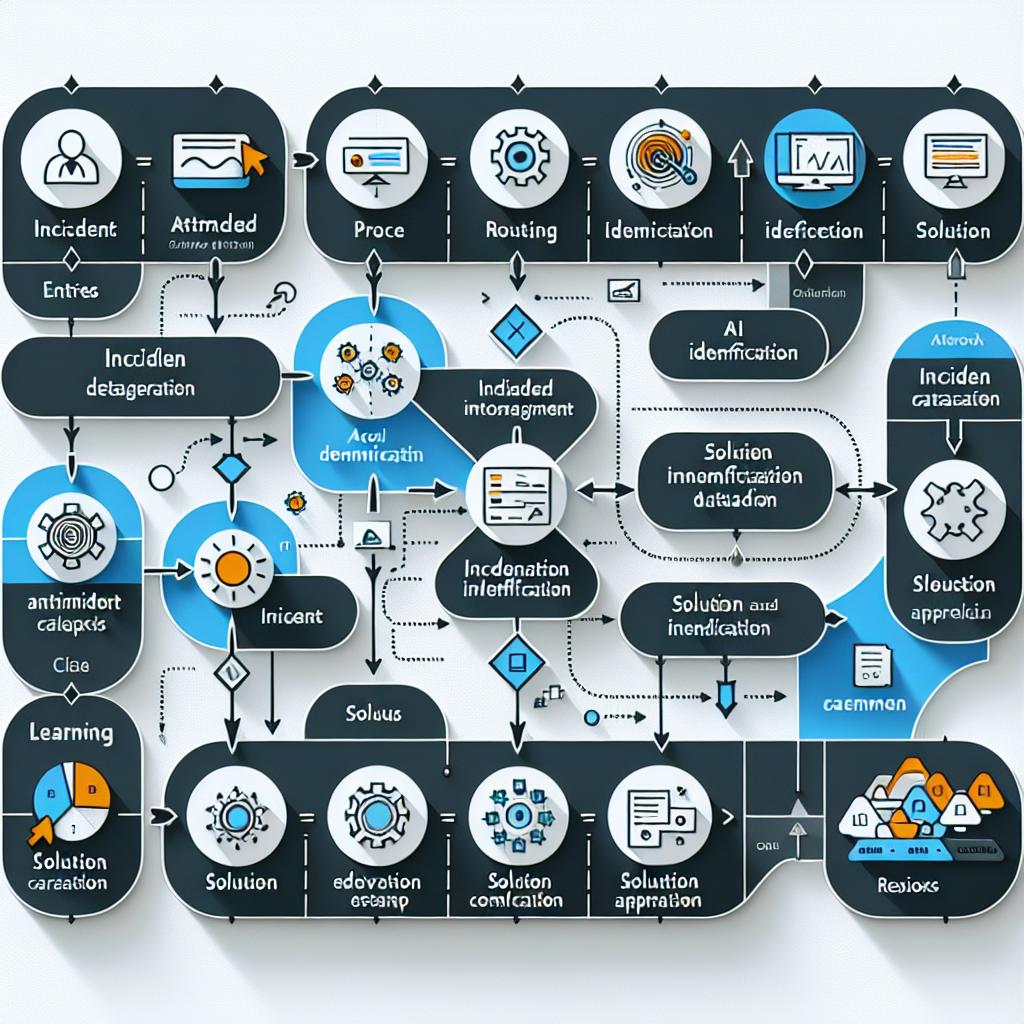
Anomaly detection refers to the process of identifying patterns in data that do not conform to expected behavior. In business operations, these anomalies might indicate system faults, security breaches, performance bottlenecks, or unusual user behavior. OpenClaw AI agents can leverage machine learning models and heuristic rules to detect anomalies across diverse data streams.
Types of Anomalies Relevant to Business Automation
- Point Anomalies: Single data points significantly different from the norm, such as a sudden spike in website error rates.
- Contextual Anomalies: Data points anomalous in a specific context, like high traffic during off-peak hours.
- Collective Anomalies: A sequence of data points that collectively indicate an issue, for example, a pattern of failed login attempts signaling a security attack.
Data Sources for Anomaly Detection
OpenClaw agents can monitor multiple data sources to detect anomalies, including:
- Server logs and error messages
- Application performance metrics (CPU, memory, response times)
- Website traffic patterns and user interactions
- Customer support ticket volumes and sentiment analysis
- Network traffic and security events
Implementing Anomaly Detection with OpenClaw AI Agents
To implement anomaly detection, OpenClaw agents can be configured with custom monitoring workflows and integrated with AI models trained on historical operational data.
Step 1: Data Collection and Preprocessing
Gather relevant datasets from your business systems and preprocess them to normalize formats and remove noise. For example, log files might be parsed to extract timestamps, severity levels, and error codes.
Step 2: Model Selection and Training
Choose suitable models based on your anomaly detection goals. Common approaches include:
- Statistical Models: Such as moving averages and standard deviation thresholds for simple anomaly detection.
- Machine Learning Models: Isolation Forest, One-Class SVM, or Autoencoders can learn complex patterns and detect subtle anomalies.
- Deep Learning: LSTM networks for time series anomaly detection in sequential data.
OpenClaw supports integration with these models via APIs or embedded scripts. For example, using Python scripts running in agent workflows to call trained models hosted on your infrastructure.
Step 3: Real-Time Monitoring and Alerting
Deploy OpenClaw agents to continuously ingest live data streams. When anomalies are detected, agents can trigger notifications or initiate automated workflows.
Example: Detecting Website Performance Anomalies
Consider a WordPress site monitored by an OpenClaw agent measuring page load times and error rates. If load times exceed a threshold or error rates spike, the agent flags an anomaly.

Automated Incident Management Workflows
Detecting anomalies is only the first step. OpenClaw AI agents can automate incident management by executing predefined or adaptive remediation workflows to resolve issues quickly.
Key Components of Incident Management Automation
- Incident Classification: Categorizing anomalies based on severity and type (performance, security, etc.).
- Prioritization: Assigning response urgency and allocating resources accordingly.
- Automated Remediation: Running scripts or commands to fix common issues, such as restarting services or clearing caches.
- Escalation: Notifying human operators or external teams if automated resolution fails.
- Documentation: Logging incidents and actions taken for auditing and continuous improvement.
Implementing Automated Remediation Example
Imagine an anomaly detected in database connectivity impacting your WordPress site. The OpenClaw agent can attempt automated remediation by:
- Restarting the database service via SSH command.
- Clearing the website cache to reduce load.
- Re-running health checks to verify resolution.
- If unsuccessful, escalating the incident to the IT support team via email or Slack notification.
Code Snippet: Automated Remediation Workflow
def handle_database_anomaly(agent, incident):
    # Restart database service
    result = agent.execute_ssh_command('sudo systemctl restart mysql')
    if not result.success:
        agent.notify_team('Database restart failed', incident.details)
        return False
    # Clear cache
    agent.execute_ssh_command('wp cache flush')
    # Verify health
    health = agent.check_service_health('mysql')
    if health.status == 'healthy':
        agent.log_incident_resolution(incident.id)
        return True
    else:
        agent.notify_team('Database still unhealthy after restart', incident.details)
        return False
Integrating Anomaly Detection and Incident Management in OpenClaw
OpenClaw’s modular architecture allows seamless integration of anomaly detection modules with incident response workflows.
Workflow Example
- Agent monitors server logs and performance metrics continuously.
- Upon detecting an anomaly, the agent classifies the incident and assesses severity.
- For low-severity incidents, automated remediation runs immediately.
- If remediation succeeds, incident is closed and logged.
- If remediation fails or incident is high-severity, alerts are sent to human operators with detailed diagnostics.
Benefits for Business Owners and Technical Operators
- Reduced Downtime: Faster identification and resolution of issues minimizes operational disruptions.
- Resource Efficiency: Automation reduces manual monitoring and incident handling workload.
- Improved Customer Experience: Maintaining system reliability enhances user satisfaction and retention.
- Detailed Incident Insights: Comprehensive logs and diagnostics support root cause analysis and continuous improvement.
Practical Considerations and Best Practices
Data Privacy and Security
Ensure that anomaly detection and incident management workflows comply with data privacy regulations. Sensitive data should be anonymized or encrypted where necessary.
Customizing Thresholds and Models
Regularly review and tune anomaly detection thresholds and model parameters to balance false positives and false negatives. Use feedback loops from incident outcomes to refine detection accuracy.
Human-in-the-Loop Integration
While automation handles routine incidents efficiently, maintain clear escalation paths for human intervention when complex or critical issues arise.
Monitoring and Reporting
Implement dashboards and reports summarizing anomaly trends, incident frequencies, and resolution times to inform stakeholders and guide strategic decisions.
Case Study: OpenClaw AI Automation in a WooCommerce Store
A medium-sized WooCommerce store integrated OpenClaw AI agents for real-time monitoring of order processing and payment gateway performance.
- Agents detected anomalies such as increased payment failures or slow checkout times.
- Automated workflows cleared transaction caches and restarted payment services, resolving 85% of incidents without manual intervention.
- Critical issues were escalated to support teams with detailed diagnostics, reducing average resolution time by 60%.
This integration resulted in improved customer satisfaction and a measurable reduction in lost sales due to technical glitches.
Conclusion
Advanced anomaly detection combined with automated incident management empowers businesses to maintain resilient and efficient operations. OpenClaw AI agents provide a flexible, scalable platform to implement these capabilities tailored to your specific environment.
By leveraging the strategies and examples outlined here, business owners and technical operators can build intelligent monitoring and response systems that minimize downtime, optimize resource use, and enhance overall business continuity.