


OpenClaw Prompts: Build Your Own AI Assistant (Full System Blueprint)
March 19, 2026
OpenClaw AI Automation: Implementing AI-Driven Workflow Optimization and Intelligent Task Prioritization (Part 18)
March 20, 2026Introduction to AI-Driven Automated Testing and CI/CD with OpenClaw
In this seventeenth installment of our OpenClaw AI Automation series, we delve into advanced techniques for implementing AI-driven automated testing and continuous integration/continuous deployment (CI/CD) workflows specifically tailored for WordPress websites and hosting environments. Automating testing and deployment is critical for maintaining robust, secure, and performant online platforms, especially for small businesses and digital agencies relying on WordPress and VPS hosting.

OpenClaw’s AI agents can now be orchestrated to run comprehensive test suites, analyze test results intelligently, and trigger CI/CD pipelines while adapting dynamically to new code changes, plugin updates, and hosting environment shifts.
Why AI-Powered Automated Testing and CI Matter
Traditional automated testing scripts require constant maintenance and often lack adaptability to evolving environments. AI agents, however, bring contextual awareness, anomaly detection, and predictive analysis to the testing process, enabling:
- Dynamic test case generation: AI agents can generate and optimize test cases based on recent changes and historical defect data.
- Intelligent failure analysis: Automated root cause analysis to reduce false positives and identify flaky tests.
- Optimized resource usage: Scheduling test runs and deployment jobs based on system load and priority.
- Seamless integration: Direct interaction with WordPress APIs, plugin repositories, and hosting control panels.
Setting Up OpenClaw for Automated Testing and CI/CD
1. Preparing Your WordPress and Hosting Environment
Ensure your WordPress site is set up on a staging or test environment that mirrors production closely. Also, configure your VPS or hosting environment to support containerized deployments or have SSH and API access for deployment automation.
- Install debugging tools like Query Monitor plugin.
- Enable logging (PHP error logs, access logs).
- Use version control (Git) integrated with your WordPress files and custom themes/plugins.
2. Configuring OpenClaw AI Agents for Testing
Develop and deploy OpenClaw AI agents with these core capabilities:
- Test Case Generation Agent: Uses change logs and commit diffs to generate relevant test scenarios.
- Test Execution Agent: Runs unit, integration, and UI tests using tools like PHPUnit, Selenium, and WP CLI commands.
- Result Analysis Agent: Applies anomaly detection and failure pattern recognition to test outputs.
- CI/CD Orchestrator Agent: Coordinates the triggering of build, test, and deployment pipelines.
3. Integrating with CI/CD Tools
OpenClaw AI agents integrate smoothly with popular CI/CD platforms such as GitHub Actions, GitLab CI, Jenkins, or CircleCI. The agents can:
- Trigger pipeline runs upon code commits or pull requests.
- Provide feedback and summaries directly in pull request comments.
- Automatically rollback deployments upon detecting critical failures.
Practical Example: Automated Testing Workflow for a WordPress Plugin Update
Consider a scenario where your team is updating a custom WordPress plugin and wants to automate testing and deployment using OpenClaw AI:
- Commit Detection: The Test Case Generation Agent monitors Git commits and detects changes in the plugin code.
- Test Generation: Based on the detected changes, it generates unit and integration test cases focusing on impacted functions.
- Test Execution: The Test Execution Agent runs PHPUnit tests and Selenium UI tests on the staging site, capturing logs and screenshots.
- Result Analysis: The Result Analysis Agent reviews test logs for failures and anomalies, distinguishing flaky tests from genuine errors.
- Pipeline Trigger: Upon passing tests, the CI/CD Orchestrator Agent triggers the deployment pipeline to push the plugin update to production.
- Monitoring: Post-deployment, OpenClaw agents monitor site health and respond to any incidents automatically.
Advanced Techniques for Enhancing AI-Driven Testing
1. Adaptive Test Prioritization and Scheduling
Use historical failure data and AI-driven risk assessment to prioritize critical tests and schedule them during low-traffic periods, optimizing resource usage and reducing deployment windows.
2. Multi-Environment Testing with AI Orchestration
Automatically spin up multiple WordPress environments (PHP versions, database engines, plugin sets) using containerization and orchestrate tests across them to guarantee compatibility and performance.
3. AI-Guided Code Quality and Security Testing
Integrate static code analysis and security vulnerability scans into your AI-driven testing pipeline. OpenClaw agents can interpret scan results and suggest fixes or block deployments if risks are detected.
Implementation Tips and Best Practices
- Maintain clear test coverage metrics: Use OpenClaw to monitor how much code and functionality your tests cover to identify gaps.
- Design AI agents with modular roles: This simplifies maintenance and scaling of capabilities.
- Leverage WordPress hooks and REST API: For deeper integration and triggering tests in response to system events.
- Secure your CI/CD credentials: OpenClaw agents should access deployment credentials through encrypted vaults or environment variables.
- Document workflows and agent roles: Keeping team members aligned on automation strategy.
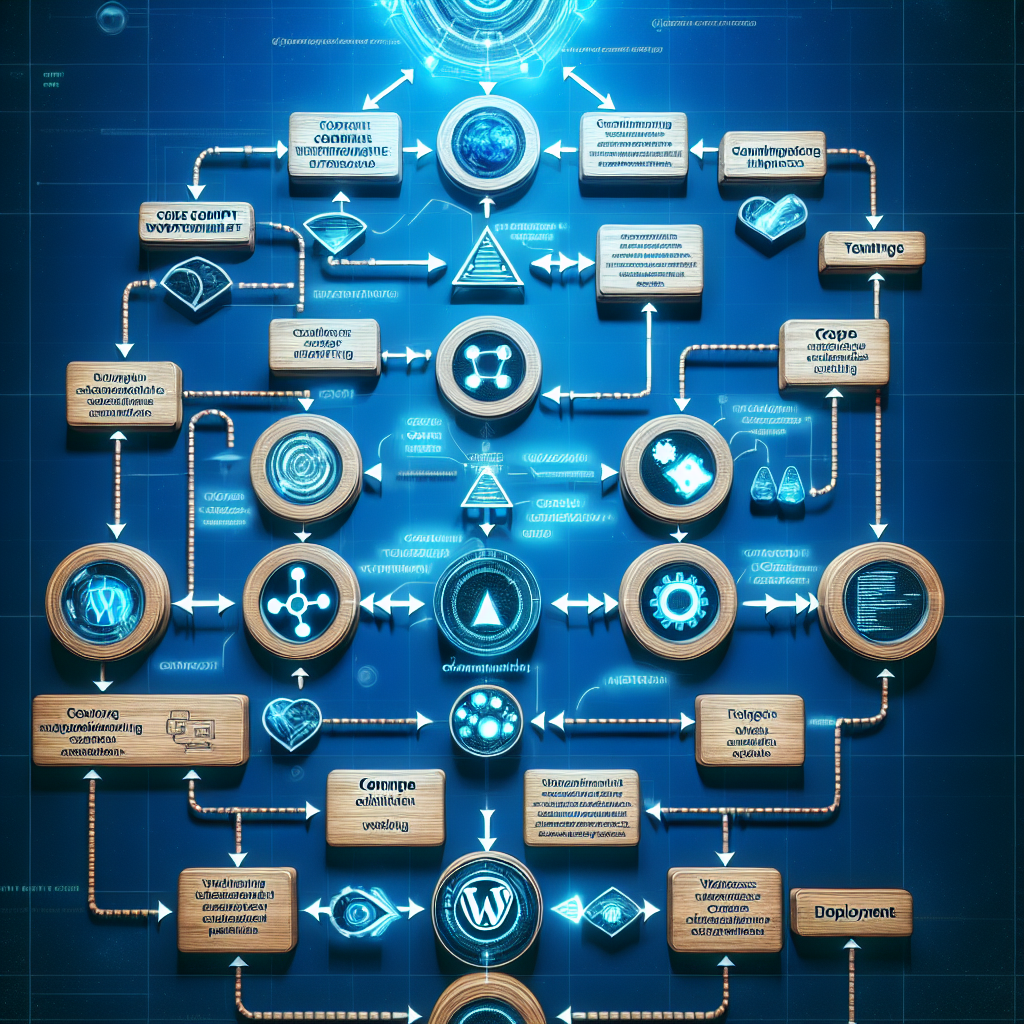
Inline Image 1
Diagram illustrating the orchestration of OpenClaw AI agents in automated testing and CI/CD pipelines.
Inline Image 2
Flowchart showing the WordPress plugin update testing lifecycle managed by OpenClaw AI agents.
Conclusion
Implementing AI-driven automated testing and continuous integration with OpenClaw agents empowers WordPress site owners and hosting operators to achieve higher reliability, faster deployment, and proactive issue resolution. By leveraging AI’s adaptability and intelligence, businesses can reduce manual overhead, minimize downtime, and maintain competitive agility in rapidly evolving environments.
In the next part, we will explore integrating OpenClaw AI agents with popular communication platforms to automate real-time incident alerts and remediation workflows.