


OpenClaw AI Automation: Advanced AI-Driven Automated Testing and Continuous Integration for WordPress and Hosting Environments (Part 17)
March 19, 2026
OpenClaw AI Automation: Leveraging AI-Driven Predictive Maintenance for WordPress and Hosting Environments (Part 19)
March 20, 2026Introduction to Workflow Optimization and Task Prioritization with OpenClaw
As businesses increasingly rely on AI-driven automation, optimizing workflows and intelligently prioritizing tasks become essential to maximize efficiency. This part of the OpenClaw series dives deep into leveraging OpenClaw AI agents to refine workflows in WordPress and hosting environments, enabling proactive task management and smarter resource allocation.
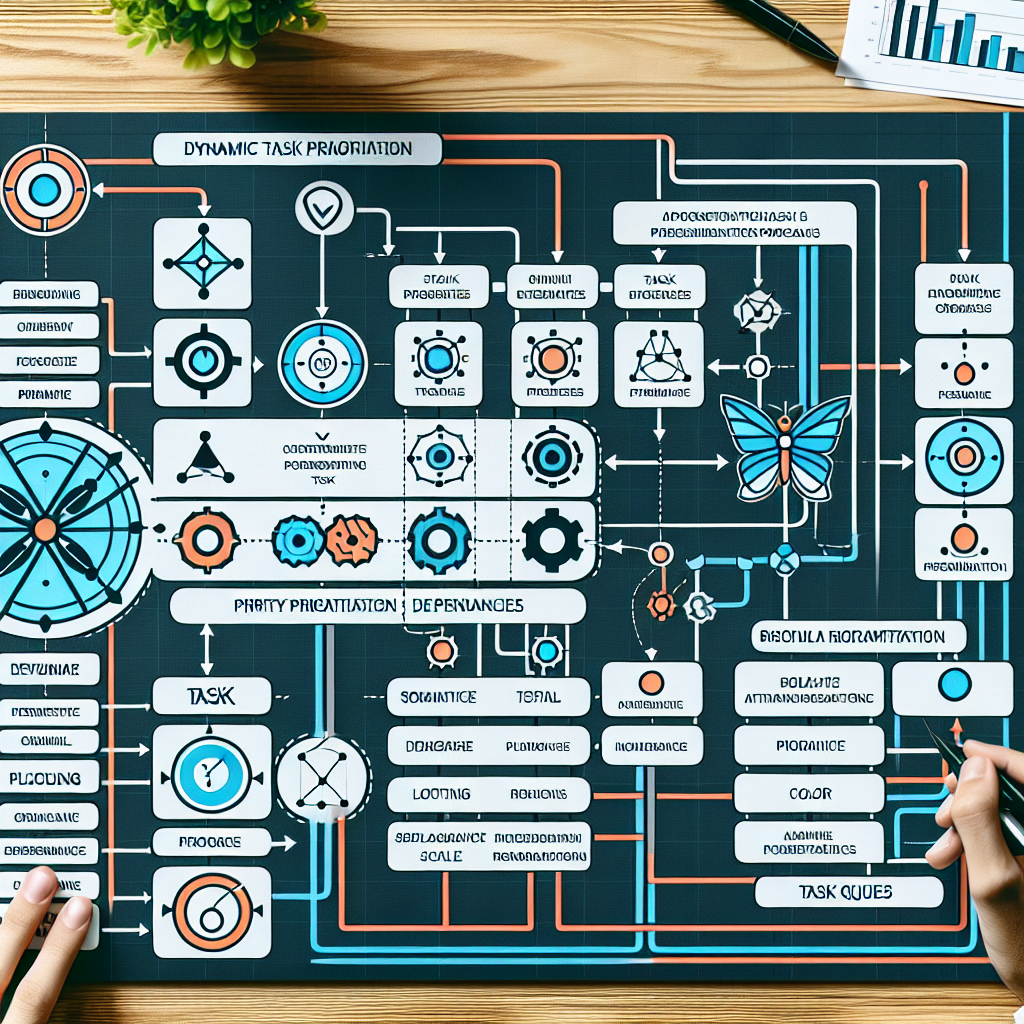
Understanding Workflow Bottlenecks in AI Automation

Before implementing optimization, it’s crucial to identify common bottlenecks in automated workflows. In WordPress and hosting contexts, these often include:
- Task Overlap: Multiple agents triggering redundant or conflicting actions.
- Resource Contention: Simultaneous processes competing for server or API resources.
- Latency in Task Execution: Delays caused by inefficient scheduling or network lag.
- Static Priority Assignment: Fixed task priorities that don’t adapt to changing business needs.
OpenClaw’s AI capabilities allow dynamic identification and resolution of these issues by continuously analyzing workflow data.
Implementing Intelligent Task Prioritization
Dynamic Priority Scoring Model
OpenClaw agents can be configured to assign priority scores to tasks dynamically using multiple weighted factors. These factors might include:
- Urgency: Deadlines or time-sensitive customer requests.
- Impact: Potential business impact or revenue effect.
- Resource Availability: Current server load and agent capacity.
- Dependency Status: Completion of prerequisite tasks.
By combining these in a scoring algorithm, OpenClaw agents can re-order queues to tackle the highest-value tasks first.
Example: Task Prioritization in WordPress Plugin Updates
Consider a scenario where multiple plugin updates are pending across client websites. OpenClaw agents evaluate each update’s urgency based on security implications, client SLA tiers, and server load. An update patching a critical vulnerability on a high-tier client site receives a higher priority score and is processed immediately, while minor aesthetic plugin updates on lower-tier sites are queued for off-peak hours.
Workflow Optimization Techniques Using OpenClaw
1. Parallelizing Independent Tasks
OpenClaw identifies independent tasks that can be safely run concurrently, such as scanning different sites for malware or generating backup snapshots. This reduces total processing time without risking conflicts.
2. Conditional Workflow Branching
Using AI-driven decision trees, OpenClaw agents can branch workflows based on real-time data. For example, if a website scan detects anomalies, the workflow can automatically prioritize security patching and alert generation before proceeding to less critical maintenance.
3. Load-Adaptive Scheduling
OpenClaw continuously monitors server resource usage and adjusts task scheduling accordingly. During peak hours, non-critical tasks are deferred, while during low usage periods, batch processing of bulk updates or backups is accelerated.
Practical Implementation: Building a Priority-Aware Workflow in OpenClaw
This section outlines step-by-step how to configure OpenClaw agents for intelligent task prioritization and workflow optimization.
Step 1: Define Task Metadata and Priority Factors
const tasks = [
  { id: 'update-plugin-A', urgency: 9, impact: 8, dependencies: [], resourceCost: 3 },
  { id: 'backup-site-1', urgency: 5, impact: 6, dependencies: [], resourceCost: 6 },
  { id: 'security-scan', urgency: 10, impact: 9, dependencies: ['backup-site-1'], resourceCost: 4 },
];
Each task includes attributes used to calculate a dynamic priority score.
Step 2: Implement Priority Scoring Function
function calculatePriority(task) {
  const weights = { urgency: 0.4, impact: 0.4, resourceCost: -0.2 };
  return (task.urgency * weights.urgency) + (task.impact * weights.impact) + (task.resourceCost * weights.resourceCost);
}
This function assigns higher priority to urgent, impactful tasks with lower resource costs.
Step 3: Sort and Schedule Tasks Based on Priority
tasks.sort((a, b) => calculatePriority(b) - calculatePriority(a));

for (const task of tasks) {
  if (task.dependencies.every(dep => isTaskComplete(dep))) {
    scheduleTask(task.id);
  } else {
    queueTask(task.id);
  }
}
This ensures dependent tasks wait until prerequisites complete, maintaining workflow integrity.
Real-World Use Case: Automated Hosting Maintenance
A hosting provider uses OpenClaw agents to manage routine maintenance across hundreds of VPS instances. The agents dynamically prioritize patching based on vulnerability severity, client business hours, and server load. They also optimize workflows by parallelizing non-conflicting tasks like log rotation and disk cleanup. The result is minimized downtime and efficient use of technical resources.
Monitoring and Continuous Improvement
OpenClaw agents log task execution times, success rates, and resource usage. This telemetry feeds into AI models that recommend workflow adjustments, such as recalibrating priority weights or identifying new task dependencies. Business owners and technical operators can review dashboards to track optimization progress.
Conclusion
Optimizing workflows and prioritizing tasks intelligently with OpenClaw AI agents significantly enhances operational efficiency in WordPress and hosting environments. By implementing dynamic priority scoring, adaptive scheduling, and parallel task execution, businesses reduce manual overhead and improve service reliability.
In the next part, we will explore integrating OpenClaw AI automation with external business intelligence systems for comprehensive data-driven decision making.