


OpenClaw AI Automation: Integrating AI-Driven Automated CRM Workflows for Enhanced Customer Management (Part 28)
March 26, 2026
OpenClaw AI Automation: Advanced AI-Driven Automated Workflow Analytics and Optimization for Small Businesses (Part 30)
March 27, 2026Introduction
In the evolving landscape of AI automation, single AI agents can deliver significant value by automating discrete tasks. However, for complex business processes spanning multiple domains such as customer support, content management, and hosting operations, orchestrating a collaborative ecosystem of AI agents becomes essential. This installment in the OpenClaw series delves into optimizing AI agent collaboration and workflow orchestration to unlock higher efficiency, resiliency, and scalability.
Why AI Agent Collaboration Matters
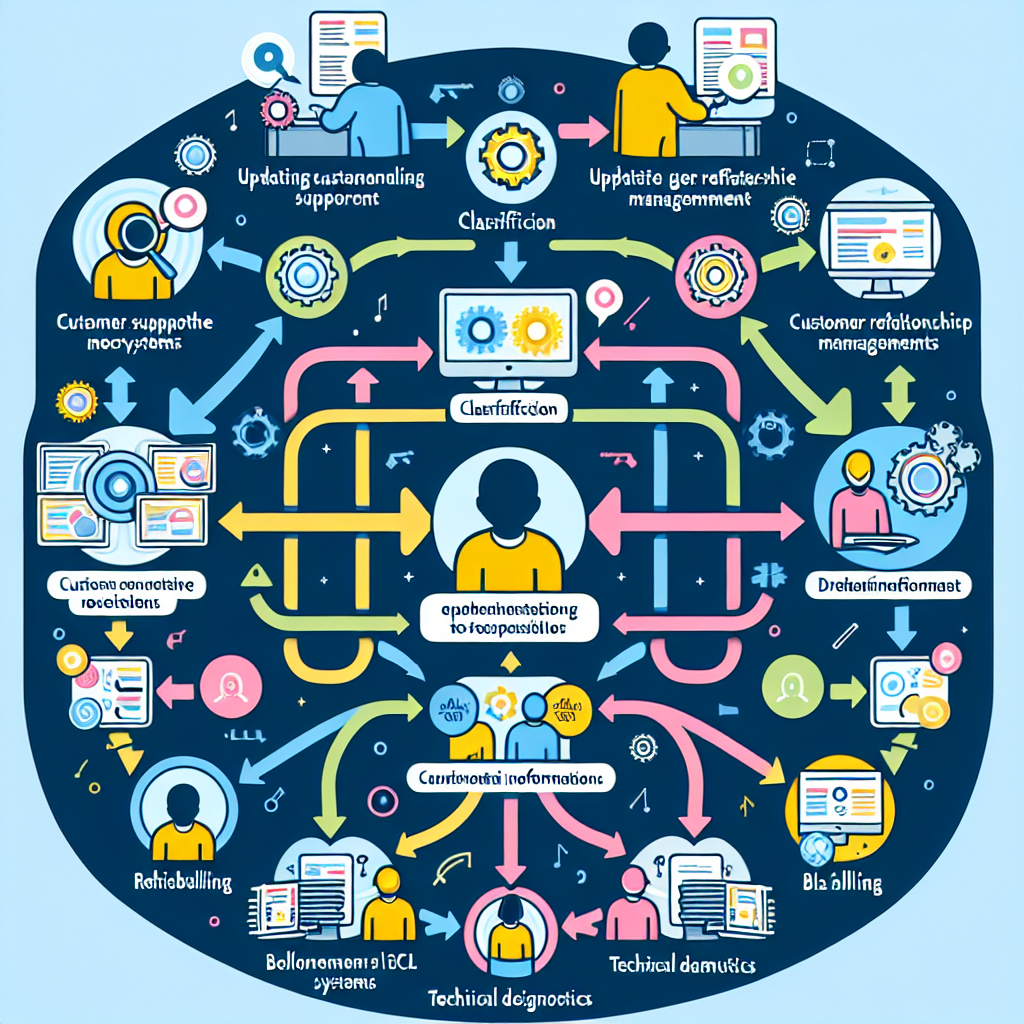
Modern business workflows often involve numerous interdependent steps and services. For example, a customer query might span support, billing, and technical troubleshooting. Deploying multiple specialized OpenClaw AI agents that can communicate and coordinate seamlessly allows each agent to focus on its domain expertise while contributing to a unified workflow. This modular approach offers:
- Specialization: Agents optimized for individual tasks (e.g., CRM updates, content generation, or server monitoring).
- Scalability: Distributed workload improves system responsiveness and reliability.
- Flexibility: Easier updates and maintenance by isolating components.
Architectural Patterns for AI Agent Collaboration
Several architectural patterns facilitate effective communication and coordination among OpenClaw AI agents:
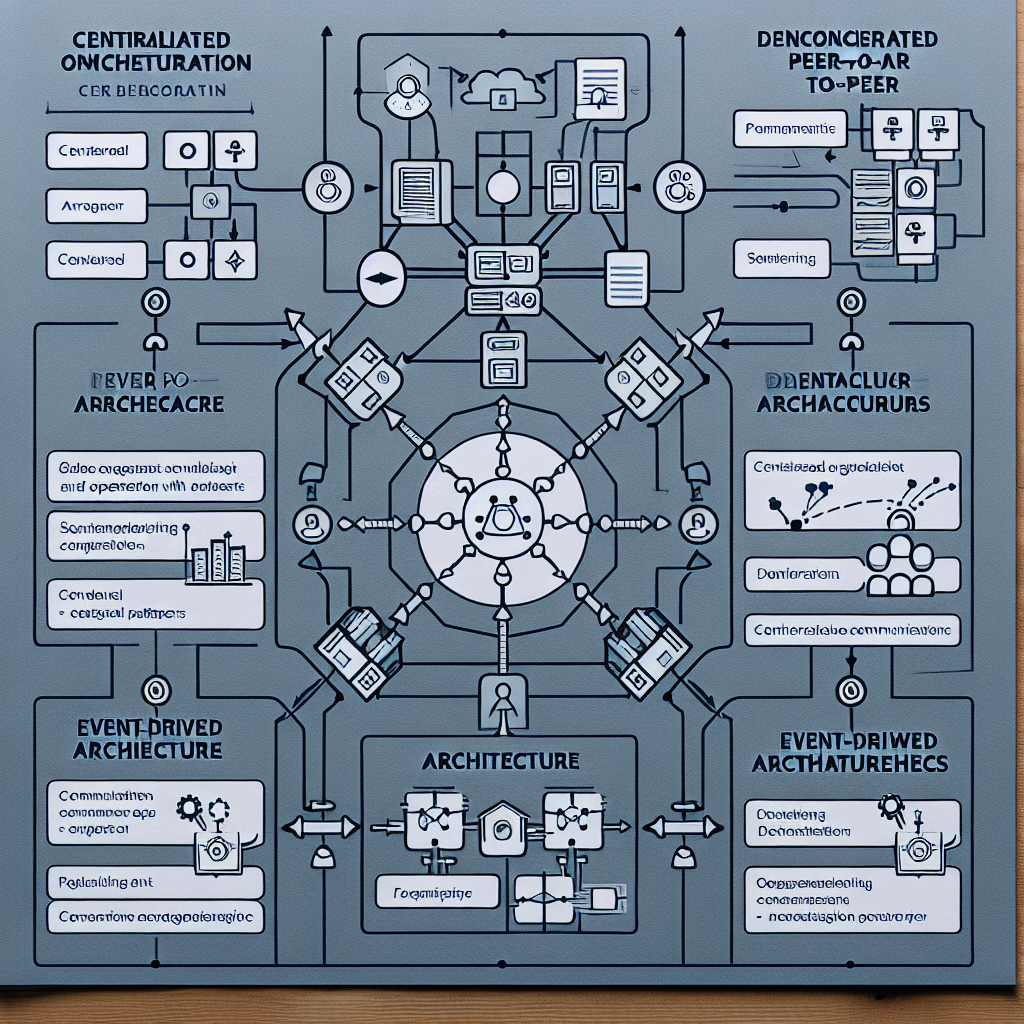
1. Centralized Orchestration
A master orchestrator agent manages workflows by invoking other specialized agents, handling task delegation, status monitoring, and error handling. This pattern simplifies workflow visualization and control but introduces a single point of failure.
2. Decentralized Peer-to-Peer Coordination
Agents communicate directly with each other via message passing or event streams, enabling dynamic task distribution and autonomous decision-making. This pattern offers resiliency and flexibility but requires robust communication protocols and conflict resolution strategies.
3. Event-Driven Architecture
Agents react to and emit events to a shared event bus or message queue (e.g., using MQTT, RabbitMQ). Workflows emerge from event chains, allowing loose coupling and asynchronous processing ideal for scalable environments.
Implementing Communication Protocols
Choosing the right communication mechanisms is crucial to ensure reliable, secure, and low-latency interactions between AI agents.
REST API with Webhooks
Agents expose RESTful endpoints for task requests and use webhooks for asynchronous callbacks. This approach leverages standard web technologies suitable for cloud-based deployments.
Message Queues and Pub/Sub Systems
Using messaging middleware such as RabbitMQ, Apache Kafka, or cloud-native services like AWS SNS/SQS allows decoupling and buffering of messages, supporting high throughput and fault tolerance.
GraphQL Federation
For complex data requirements, federated GraphQL APIs enable agents to query and mutate data efficiently across services, enhancing transparency and reducing over-fetching.
Practical Example: Coordinated Customer Support Workflow
Consider a scenario where a small business implements a multi-agent OpenClaw system to automate customer support workflows:
- Agent 1: Initial customer query classification and routing.
- Agent 2: CRM update with customer interaction logs.
- Agent 3: AI-powered knowledge base retrieval and response generation.
- Agent 4: Billing system integration for payment inquiries.
- Agent 5: Technical diagnostics and incident ticket creation.
Workflow orchestration: A centralized orchestrator receives the initial query, invokes Agent 1 to classify the issue, then sequentially or in parallel dispatches tasks to other agents as needed. Agents communicate results back to the orchestrator, which consolidates responses for the customer.
Implementation Details
- Define a
WorkflowManagerservice that exposes a REST API endpoint/start-support-workflow. - Upon receiving a customer query, the
WorkflowManagercalls Agent 1’s classification endpoint. - Based on classification, invoke relevant agents concurrently using asynchronous HTTP calls or message queue events.
- Collect responses via webhook callbacks or event listeners.
- Aggregate and format final response, send back to customer via preferred channel (email, chat, WhatsApp).
- Update CRM and ticketing systems asynchronously to avoid blocking the support response.
Handling Failures and Retries
Robust orchestration must handle partial failures gracefully:
- Timeouts: Define operation timeouts to avoid indefinite waits.
- Retries: Implement exponential backoff retry policies for transient errors.
- Fallbacks: Use default responses or escalate to human agents if automation fails repeatedly.
- Logging and Monitoring: Centralized logging of agent interactions and errors for auditing and debugging.
Scaling AI Agent Collaboration
To scale efficiently as business demands grow:
- Containerization: Deploy agents in Docker containers orchestrated by Kubernetes for automatic scaling and failover.
- Load Balancing: Distribute incoming workflow requests evenly across orchestrator instances.
- Horizontal Scaling: Spin up multiple instances of specialized agents to handle parallel workloads.
- Resource Optimization: Monitor CPU, memory, and API rate limits to adjust agent concurrency dynamically.
Security Considerations
Secure communication and data privacy are paramount when multiple AI agents interact:
- Authentication and Authorization: Use OAuth 2.0 or API keys to restrict agent API access.
- Encryption: Enforce TLS for all inter-agent communication.
- Data Minimization: Share only necessary data between agents to reduce exposure.
- Audit Trails: Maintain comprehensive logs for compliance and forensic analysis.
OpenClaw-Specific Tools and Extensions
The OpenClaw framework supports multi-agent orchestration through built-in features and integrations:
- Agent Registry: A centralized directory of active agents with metadata and health status.
- Workflow DSL: Domain-specific language to define workflows declaratively, enabling non-developers to design automation pipelines.
- Event Bus Integration: Plug-ins for popular message brokers for seamless event-driven orchestration.
- Monitoring Dashboard: Visualize agent performance, interactions, and workflow progress in real-time.
Case Study: Boosting Small Business Efficiency with OpenClaw AI Agent Collaboration
A boutique digital agency integrated multiple OpenClaw AI agents to automate their client onboarding process:
- Document verification agent scanned client-submitted files.
- Contract generation agent prepared personalized agreements.
- Billing agent set up payment schedules.
- Welcome email agent sent customized greetings with onboarding instructions.
The orchestrator coordinated these agents to complete onboarding in under an hour, reducing manual effort by 80% and improving client satisfaction.
Conclusion
Optimizing AI agent collaboration and workflow orchestration with OpenClaw unlocks the full potential of AI automation for small businesses and website owners. By adopting modular architectures, robust communication protocols, and scalable deployment strategies, organizations can automate complex processes with greater reliability and flexibility.
Future installments will explore advanced AI agent customization and adaptive learning for continuously improving automation workflows.
Further Reading
- OpenClaw AI Automation: Integrating AI-Driven Automated CRM Workflows for Enhanced Customer Management (Part 28)
- OpenClaw AI Automation: Deploying AI-Powered WhatsApp Customer Support Bots for Small Businesses (Part 29)
- OpenClaw AI Automation: Implementing AI-Driven Automated User Behavior Analytics and Conversion Optimization for WordPress (Part 27)