


OpenClaw AI Automation: Advanced AI-Driven Automated WordPress Security Hardening and Threat Mitigation (Part 39)
April 2, 2026
OpenClaw AI Automation: Implementing AI-Driven Automated WordPress Content Migration and Synchronization (Part 41)
April 3, 2026Introduction to WordPress Multisite and OpenClaw AI Automation
WordPress Multisite is a powerful feature enabling the management of multiple WordPress sites from a single installation. For businesses and agencies managing several websites, it provides centralized control and streamlined operations. However, Multisite networks introduce complexity in administration, performance tuning, security, and scalability.
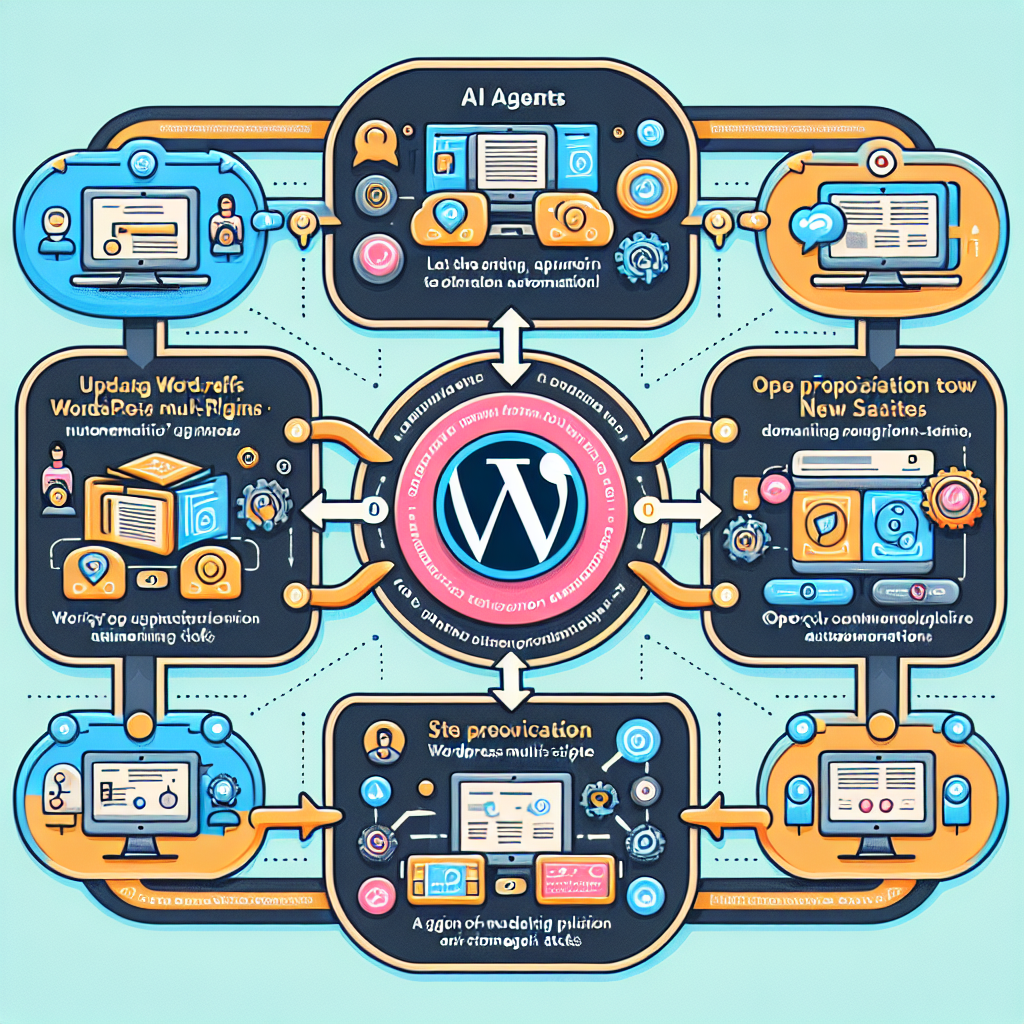
This article, Part 40 in the OpenClaw series, delves into new, practical ways to employ OpenClaw AI automation for managing and optimizing WordPress Multisite environments. We will explore how AI agents can automate routine tasks, monitor network health, optimize performance, and enforce security protocols effectively.
Understanding the Challenges of WordPress Multisite Management

Before diving into automation strategies, it is essential to grasp the unique challenges inherent in WordPress Multisite setups:
- Centralized User Management: Managing users across sites with varying roles and permissions.
- Plugin and Theme Updates: Coordinating updates that affect all sites, ensuring compatibility and minimizing downtime.
- Performance Monitoring: Identifying bottlenecks that impact multiple sites simultaneously.
- Security Enforcement: Protecting the entire network against vulnerabilities while isolating site-specific issues.
- Backup and Recovery: Implementing efficient backup strategies that consider the multisite architecture.
Automating WordPress Multisite Setup and Configuration with OpenClaw
Automated Network Initialization
OpenClaw AI agents can be programmed to automate the initial setup of a WordPress Multisite network. This includes configuring the wp-config.php file for multisite support, enabling network features, and establishing the primary site settings.
Example Implementation: Using OpenClaw, an AI agent can detect a fresh WordPress installation and execute scripts to enable multisite mode, configure domain mapping options, and set up a default site template. This reduces manual setup time and ensures consistency across installations.
Site Provisioning Automation
Deploying new sites within the multisite network can be automated via AI-driven workflows. OpenClaw agents gather required site metadata, configure site-specific settings, and assign roles and permissions. This is especially useful for agencies onboarding new clients rapidly.
AI-Driven Plugin and Theme Lifecycle Management Across Multisite
Managing plugins and themes in multisite is complex as updates must be compatible network-wide. OpenClaw AI agents automate these processes with precision:
- Automated Compatibility Checks: AI analyzes plugin and theme updates for compatibility issues by cross-referencing version changes and known conflicts.
- Staged Updates and Rollbacks: Agents initiate updates in a staging environment that mirrors the live network, running automated tests before applying changes across the network.
- Usage Analytics: Monitoring plugin usage per site to identify unused components that can be safely disabled or removed, thus optimizing resource usage.
Performance Optimization Using OpenClaw AI Agents
Real-Time Multisite Network Monitoring
OpenClaw AI agents continuously monitor server resource usage, database queries, and page load times across all sites. They detect anomalies or degradation and trigger automated optimization routines or notify administrators.
Automated Caching and CDN Integration
AI agents configure and optimize caching layers (object cache, page cache) and integrate Content Delivery Networks (CDNs) tailored to multisite traffic patterns. OpenClaw can dynamically adjust cache invalidation policies based on site activity changes.
Database Optimization
Multisite databases can grow large and fragmented. OpenClaw agents schedule automated database maintenance such as cleaning orphaned tables, optimizing indexes, and archiving old data to maintain responsiveness.
Security Automation Tailored for WordPress Multisite
Network-Wide Security Policy Enforcement
OpenClaw AI applies uniform security policies across the multisite network, including password strength enforcement, two-factor authentication (2FA), and role-based access control (RBAC). AI agents also detect deviations and automatically remediate or alert admins.
Vulnerability Scanning and Automated Patching
Agents perform continuous vulnerability assessments leveraging updated threat intelligence. When risks are detected, OpenClaw can apply patches or quarantine affected sites automatically, preventing lateral threat movement within the network.
Automated Incident Response
OpenClaw AI integrates incident response workflows specific to multisite, such as isolating compromised sites, blocking suspicious IP addresses, and generating forensic reports for security teams.
Backup and Disaster Recovery Automation in Multisite Environments
OpenClaw AI agents manage multisite backup strategies with granularity and automation:
- Incremental and Differential Backups: Optimizing storage and recovery time by backing up only changed data across the network.
- Site-Specific Restorations: Enabling restoration of individual sites without affecting the entire network.
- Automated Backup Verification: AI agents verify backup integrity continuously and alert if issues arise.
Practical Example: Automating Multisite Onboarding Workflow
Consider a web agency managing dozens of client sites on a WordPress multisite network. Using OpenClaw AI agents, the onboarding workflow can be fully automated as follows:
- Client Data Intake: AI agent collects client requirements, branding assets, and initial content via forms.
- Site Creation: Automatically provisions a new site with preconfigured themes and plugins aligned to client’s needs.
- User Role Assignment: Configures client-specific users with appropriate permissions.
- Performance Baseline Setup: Initiates baseline performance monitoring and caching setup.
- Security Hardening: Applies security policies automatically, including custom firewall rules for the new site.
- Notification: Sends confirmation emails with site access details and onboarding resources.
This end-to-end automation reduces onboarding time from days to minutes, improves consistency, and frees up technical staff for higher-value tasks.
Integration Best Practices for OpenClaw AI with Multisite
To maximize benefits when deploying OpenClaw AI agents for WordPress multisite management, consider these practices:
- Modular Agent Design: Separate agents for user management, security, performance, and backup to allow independent scaling and updates.
- API-Driven Operations: Use WordPress REST API and CLI commands for agent interactions to maintain compatibility and reduce risks.
- Logging and Audit Trails: Maintain detailed logs of agent activities for compliance and troubleshooting.
- Fail-Safe Mechanisms: Implement rollback procedures and human approval gates for critical changes.
Conclusion
WordPress Multisite networks can become complex to manage as they scale, but OpenClaw AI automation presents a robust solution to simplify administration, enhance security, and optimize performance. By implementing AI-driven workflows for setup, updates, monitoring, and incident response, businesses gain agility and reduce overhead.
For small business owners, agencies, and technical operators, embracing these advanced OpenClaw strategies means delivering better, faster, and more secure multisite management. Future installments will explore AI-driven analytics and predictive maintenance tailored to multisite environments.