
Enhancing User Experience: The Fusion of Website Design and Virtual Reality
June 10, 2024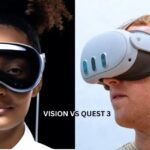
Comparing Metta Quest and Apple Vision Pro: Which is the Better Choice?
June 11, 2024# Exploring the Frontier: Why Meta Quest 3 Leads the VR Revolution
Introduction to Meta Quest 3: The New Standard in VR Technology
The Meta Quest 3 marks a significant milestone in the evolution of virtual reality (VR) technology. As the latest offering from Meta, formerly known as Facebook, this device not only continues the legacy of its predecessors but also sets a new benchmark in the VR industry. With its advanced features and user-centric design, the Meta Quest 3 is poised to transform how people interact with digital content. The device is built on the foundation of accessibility and performance, aiming to make immersive experiences more vivid and engaging than ever before.
The Quest 3 is designed to be a standalone system, eliminating the need for external hardware connections. This independence from PCs or consoles is a game-changer, making high-quality VR more accessible to a broader audience. The integration of cutting-edge technology and user-friendly interfaces makes it an appealing choice for both VR enthusiasts and newcomers. The device’s launch is not just an upgrade of hardware but a leap towards a more interconnected and immersive digital future.
Meta has focused on reducing the barriers to entry for VR technology with the Quest 3. By enhancing the ease of use and affordability, Meta aims to bring VR to every household. The device’s ability to operate independently without additional equipment underscores Meta’s commitment to democratizing advanced technology. This approach not only broadens the user base but also fosters a more inclusive VR community.
The anticipation surrounding the Meta Quest 3 is indicative of its potential impact on the tech landscape. As VR continues to permeate various sectors—ranging from gaming and entertainment to education and training—the Quest 3 is at the forefront, guiding the charge towards a more immersive digital age. Its launch is not merely a product release; it is a significant step forward in the ongoing VR revolution.
Innovative Features of Meta Quest 3: What Sets It Apart
The Meta Quest 3 distinguishes itself through several innovative features that enhance the user experience and expand the device’s capabilities. One of the standout features is the improved resolution and display technology. The Quest 3 utilizes a state-of-the-art optical system that delivers clearer and more vibrant visuals, making the virtual environments more realistic and immersive. This advancement not only improves visual fidelity but also reduces eye strain, allowing for longer and more comfortable VR sessions.
Another significant enhancement is the introduction of advanced hand-tracking technology. The Quest 3’s ability to accurately track hand movements without the need for external controllers offers users a more natural and intuitive way to interact with virtual environments. This feature opens up new possibilities for gameplay, educational applications, and professional simulations, making the VR experience more accessible and engaging.
The device also features a more powerful processor and increased memory capacity, which enable more complex and detailed virtual experiences. These improvements allow developers to create richer content with more sophisticated graphics and interactions. The Quest 3’s enhanced computational power also ensures smoother performance and faster load times, enhancing the overall user experience.
Furthermore, Meta has integrated a new social platform that makes it easier for users to connect with friends and join communities within VR. This social connectivity is crucial for the growth of VR as a mainstream technology, as it enables shared experiences and fosters a sense of community among users. The Quest 3’s social features are designed to make VR more collaborative and enjoyable, further setting it apart from other devices on the market.
The Impact of Enhanced Graphics and Immersion on User Experience
The Meta Quest 3’s enhanced graphics capabilities significantly impact the user experience by providing more immersive and lifelike virtual environments. The improved resolution and color accuracy ensure that every detail is rendered with precision, from the texture of materials to the subtle interplay of light and shadow. This level of graphical fidelity not only enhances the visual appeal of VR experiences but also contributes to a deeper sense of presence and immersion.
The immersion is further amplified by the device’s spatial audio technology, which delivers 3D soundscapes that are synchronized with the visual elements. This audio enhancement helps users fully engage with the VR environment, making interactions feel more realistic and responsive. Whether navigating through a crowded cityscape or exploring a quiet forest, the Quest 3’s audio-visual integration creates a compelling and believable virtual world.
The impact of these enhancements extends beyond entertainment and gaming. In educational settings, the realistic simulations enabled by the Quest 3 can provide students with hands-on learning experiences that are both engaging and effective. For professionals, the device offers a new dimension of training and collaboration tools that can be used to practice skills, visualize complex data, and conduct remote meetings.
The overall user experience is also improved by the device’s ergonomic design, which ensures comfort during extended use. The lightweight and balanced construction of the Quest 3, combined with its adjustable straps and breathable materials, make it suitable for a wide range of users. This focus on comfort is crucial for encouraging longer and more frequent VR sessions, further enhancing the immersive experience.
Comparing Meta Quest 3 with Previous Models and Competitors
The Meta Quest 3 represents a significant evolution from its predecessors, such as the Quest 2. One of the most notable improvements is the enhanced processing power, which allows the Quest 3 to handle more complex applications and offer a smoother user experience. This upgrade addresses one of the common criticisms of earlier models—the limitation in processing capabilities, which restricted the types of experiences that could be effectively rendered.
In comparison to competitors like the HTC Vive and Sony PlayStation VR, the Quest 3 stands out due to its standalone nature, eliminating the need for external hardware. This not only simplifies the setup process but also enhances the device’s portability, allowing users to enjoy high-quality VR in a variety of settings. Additionally, the Quest 3’s competitive pricing makes it an attractive option for consumers looking to explore VR without making a significant financial investment.
The Quest 3 also excels in terms of ecosystem development. Meta has invested heavily in creating a robust platform for developers, which has resulted in a wide array of content available for the device—from games and social experiences to educational tools and productivity applications. This diverse content library is supported by Meta’s ongoing updates and enhancements, ensuring that the platform continues to evolve and meet the needs of its users.
While competitors may offer certain features that are comparable or superior in specific aspects, such as higher resolution displays or more precise tracking systems, the Quest 3’s overall balance of performance, accessibility, and content availability makes it a leader in the consumer VR market. Its ability to deliver a comprehensive and user-friendly VR experience is a key factor in its popularity and influence.
The Role of Meta Quest 3 in Shaping the Future of Virtual Reality
The Meta Quest 3 is not just a commercial product; it is a catalyst for the broader adoption and development of VR technology. By making VR more accessible and engaging, the Quest 3 is helping to break down the barriers that have previously limited the technology’s appeal and practicality. This democratization of VR has the potential to revolutionize a variety of fields, from entertainment and media to education and healthcare.
In the entertainment sector, the Quest 3 enables more immersive and interactive forms of storytelling and gaming. As developers continue to explore the capabilities of the platform, users can expect a new generation of VR content that leverages the device’s advanced features to create experiences that are not possible through traditional media.
In educational contexts, the Quest 3 offers a powerful tool for experiential learning. Whether simulating historical events, visualizing scientific concepts, or practicing language skills in a virtual environment, the device provides a dynamic platform for enhancing education with practical, engaging applications.
The potential impact of the Quest 3 extends into professional and industrial realms as well. For example, in architecture and engineering, professionals can use VR to visualize and interact with 3D models, improving the design process and client presentations. In healthcare, VR can be used for surgical training, patient rehabilitation, and therapy, offering new methods for treatment and care.
As VR technology continues to evolve, the Quest 3’s role in shaping its trajectory is clear. By pushing the boundaries of what is possible in virtual environments, Meta is not only advancing its own product line but also driving innovation across the entire industry. This leadership is crucial for the future development of VR as a transformative technology.
Conclusion: The Meta Quest 3 and the Ongoing VR Revolution
The Meta Quest 3 is at the forefront of the VR revolution, setting new standards in technology, usability, and content. With its innovative features, enhanced graphics, and immersive capabilities, the device offers a glimpse into the future of digital interaction. As VR technology continues to permeate various sectors, the Quest 3’s role in shaping this landscape is undeniable.
Meta’s commitment to improving and expanding the VR ecosystem is evident in the Quest 3’s design and functionality. By providing a platform that is both powerful and accessible, Meta is not only catering to the needs of current VR users but also attracting new audiences to the technology. This expansion of the user base is essential for the long-term viability and growth of VR.
The ongoing VR revolution is about more than just hardware advancements; it is about changing the way people interact with technology and each other. The Meta Quest 3 is a key player in this transformation, offering tools that enhance communication, creativity, and collaboration. As we look to the future, the potential applications of VR are vast and varied, promising a world where virtual experiences are as rich and meaningful as those in the physical world.
In conclusion, the Meta Quest 3 is not just leading the VR revolution—it is redefining it. With each advancement, VR becomes more integrated into our daily lives, opening up new possibilities for how we work, learn, play, and connect. The Quest 3, with its cutting-edge technology and broad appeal, is paving the way for a future where VR is ubiquitous and transformative.