


OpenClaw AI Automation: Advanced AI-Driven Automated WordPress Security Incident Response and Forensic Analysis Workflows (Part 83)
April 27, 2026
OpenClaw AI Automation: Automating WordPress User Feedback Analysis and Action Workflows (Part 85)
April 28, 2026Introduction
Managing multilingual content effectively is a critical challenge for WordPress site owners aiming to reach global audiences. Traditional approaches require manual translation, content duplication, and ongoing maintenance, which can be resource-intensive and error-prone. In this part of the OpenClaw series, we delve into building AI-driven automated workflows that streamline multilingual content management by leveraging OpenClaw AI agents.
Why Automate Multilingual Content Management?
Multilingual content boosts audience reach, improves SEO in different languages, and elevates user experience. However, maintaining consistent, high-quality translations and managing updates across languages can overwhelm content teams. Automation with AI helps by:
- Reducing manual translation workload with AI-powered translation engines.
- Ensuring consistent terminology and style across languages.
- Synchronizing content updates automatically across all language versions.
- Optimizing translated content for SEO in target languages.
Key Components of OpenClaw Multilingual Workflows
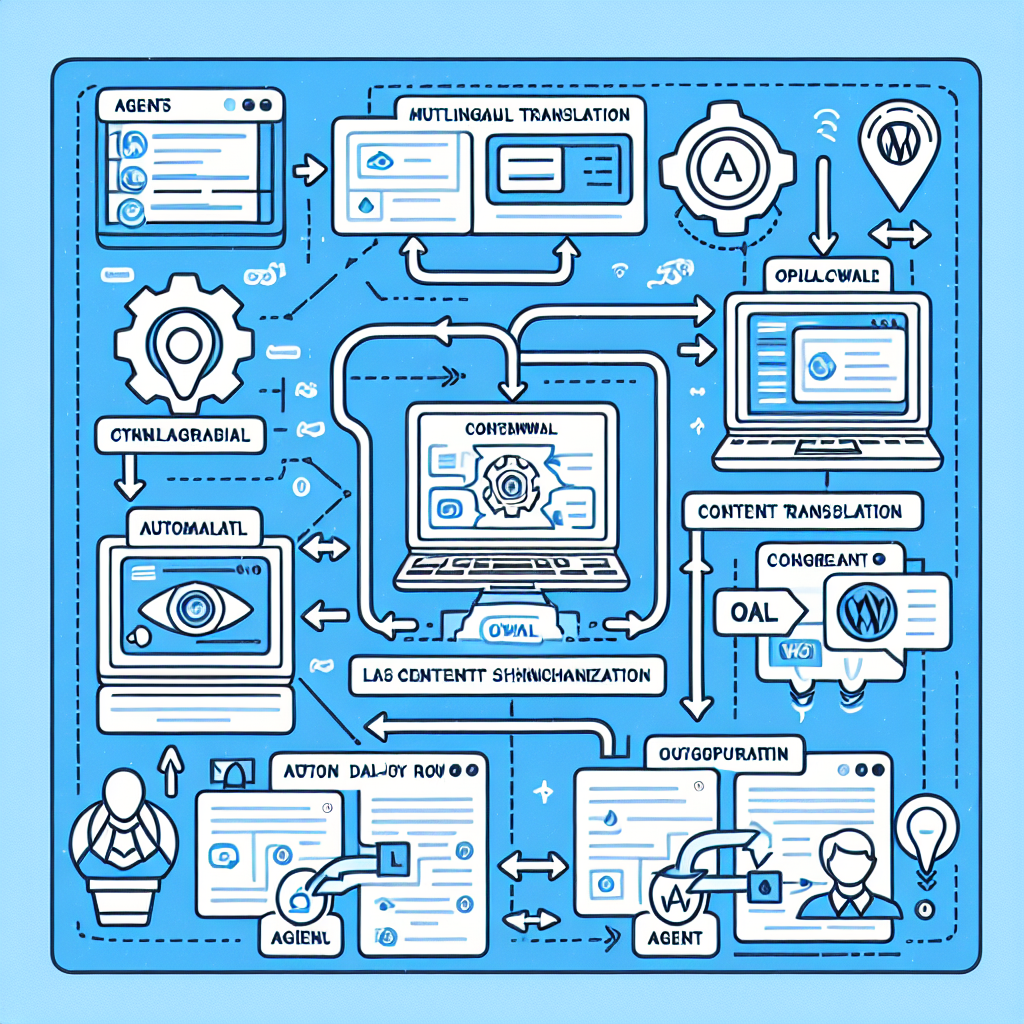
To build an effective workflow, multiple components need to work in harmony. OpenClaw AI agents facilitate these tasks by integrating with WordPress and external AI services.
1. Content Identification and Segmentation
The workflow starts with the AI agent identifying new or updated content that requires translation. This involves monitoring post creation, edits, and metadata changes using WordPress hooks and APIs.
2. Automated Translation Integration
OpenClaw agents call AI translation APIs (such as OpenAI’s GPT for context-aware translation or specialized translation APIs) to generate translated content drafts automatically.
3. Translation Quality Assurance and Post-Editing
The AI agent applies natural language processing techniques to evaluate and improve translation quality, flagging inconsistencies or awkward phrasing for human editors or automatically refining them using AI-driven editing.
4. Multilingual Content Synchronization
When the source content updates, the AI agent triggers workflows to update all language versions accordingly, managing version control and conflict resolution.
5. SEO Optimization for Translations
OpenClaw agents analyze translated content for keyword relevance, meta tags, and URL structures to optimize search engine visibility in each language.
Step-by-Step Implementation Guide
Step 1: Configure Language Setup in WordPress
Begin by installing and configuring a multilingual plugin such as WPML or Polylang that supports custom language management. The OpenClaw AI agent will interface with these plugins’ APIs to create and update translations.
Step 2: Implement Content Change Detection
Use WordPress action hooks like save_post and post_updated to trigger OpenClaw workflows when content changes. The AI agent then queues the content for translation processing.
Step 3: AI-Powered Translation Generation
The AI agent extracts the source content text and sends it to the translation API. For context-aware and accurate translations, it includes metadata and content type information. The translated draft is stored as a new post in the target language.
Step 4: Automatic Quality Checks and Refinement
The workflow includes AI-based grammar and style checking modules. The agent may perform:
- Consistency checks on terminology.
- Fluency scoring and rephrasing where needed.
- Flagging for manual review if confidence is below threshold.
Step 5: Synchronizing Updates Across Languages
When the original content is updated, the workflow automatically detects changes and notifies the AI agent to re-translate or update translations. This preserves consistency across all languages.
Step 6: SEO Optimization Automation
The AI agent analyzes translated content using language-specific SEO rules, optimizes meta descriptions, generates localized keywords, and updates permalinks to maintain SEO integrity.
Practical Example: Automating Blog Post Translation Workflow
Consider a WordPress blog with English posts needing translation into Spanish and French. Here’s a simplified flow leveraging OpenClaw AI agents:
- Author publishes a new blog post in English.
- OpenClaw agent detects the new post and extracts title, body, and metadata.
- Agent sends content to AI translation API with instructions for Spanish and French.
- Translated drafts are created as separate posts linked by language metadata.
- Agent runs quality checks and applies SEO optimization for each language.
- Translated posts are published automatically or queued for editorial review depending on confidence score.
- When original post updates, agent triggers updates on translations accordingly.
Advanced Tips for Enhancing Your Multilingual Workflows
Custom Terminology Glossaries
Create and maintain domain-specific glossaries used by AI translation models to maintain brand voice and terminology consistency across languages.
Contextual Translation Prompts
Enhance translation accuracy by providing AI with additional context such as target audience, content type, and tone of voice within prompts.
Human-in-the-Loop Integration
Incorporate manual review steps selectively for critical content using OpenClaw’s workflow triggers and notifications, blending automation with expert oversight.
Performance Monitoring and Analytics
Use OpenClaw’s monitoring capabilities to track translation workflow metrics such as turnaround time, error rates, and SEO performance by language to continuously improve processes.
Security and Compliance Considerations
When handling multilingual content, especially involving personal data or regulated content, ensure that AI agents comply with data protection laws such as GDPR. Use encrypted API calls and audit logs for all translation activities.
Conclusion
Automating multilingual content management with OpenClaw AI agents empowers WordPress site owners to expand globally while reducing operational overhead. By integrating AI-driven translation, quality assurance, synchronization, and SEO optimization into cohesive workflows, businesses can deliver consistent, high-quality multilingual experiences at scale.
In the next part, we will explore AI-driven automated WordPress e-commerce localization workflows to complement multilingual content management strategies.