


OpenClaw AI Automation: Implementing AI-Driven Automated Content Quality Assurance and Compliance for WordPress (Part 35)
March 30, 2026
OpenClaw AI Automation: Integrating AI-Driven Automated Customer Feedback Analysis and Actionable Insights for WordPress (Part 37)
March 31, 2026Introduction
Building on our previous discussions about AI-driven automation for WordPress, this installment delves into automated incident prediction and proactive remediation using OpenClaw AI agents. While reactive incident response is critical, the ability to anticipate incidents before they occur—and take automated corrective actions—marks a significant advancement in maintaining site stability, security, and performance.
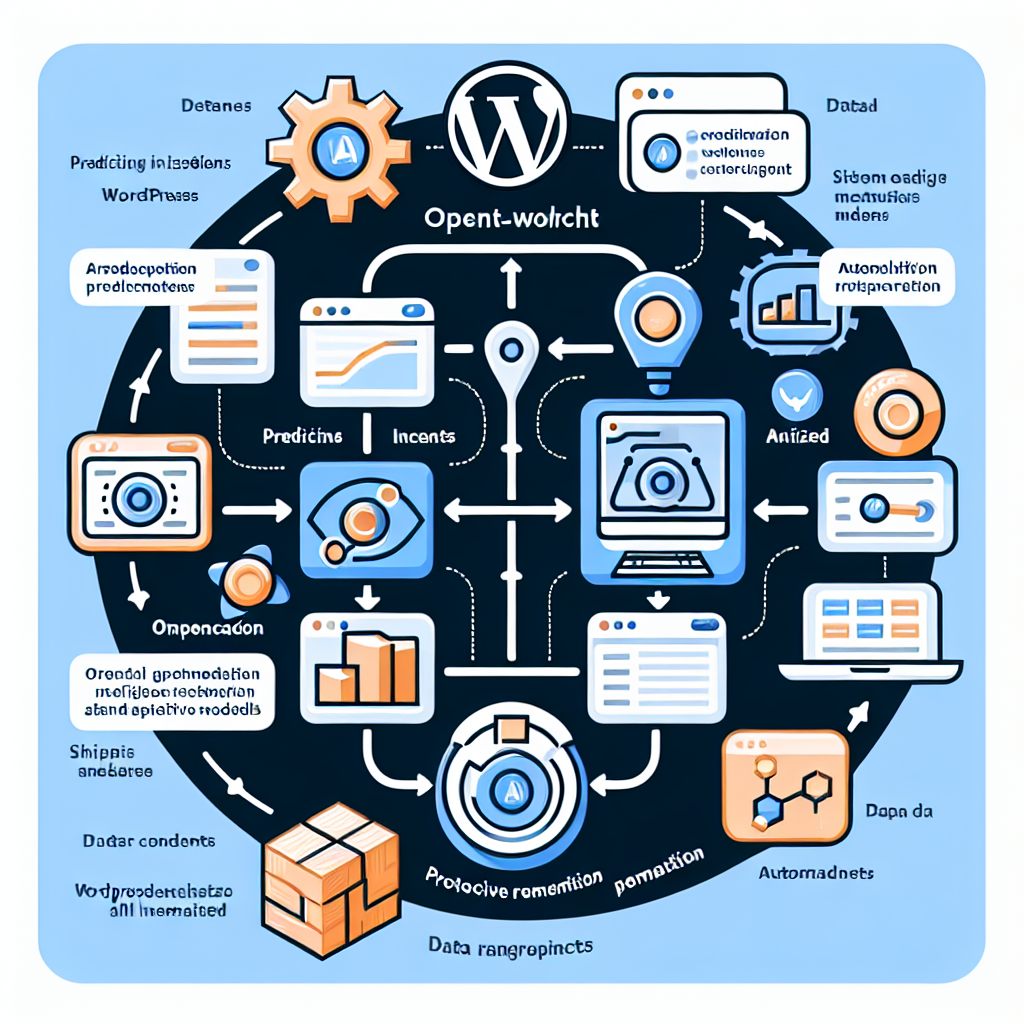
Understanding Incident Prediction in WordPress Environments

Incident prediction involves analyzing historical data, system logs, and real-time monitoring metrics to identify patterns that typically precede issues such as server overloads, plugin conflicts, security breaches, or database errors. Leveraging AI for this task means continuously learning from evolving site behaviors to improve prediction accuracy.
Key Data Sources for Prediction
- Server logs: Error logs, access logs, and resource utilization statistics provide critical signals.
- WordPress activity logs: Track plugin updates, theme changes, and user activity.
- Performance metrics: CPU, memory, page load times, and database query speeds.
- Security alerts: Failed login attempts, firewall blocks, and suspicious IP activity.
Machine Learning Models for Incident Prediction
OpenClaw AI agents can be equipped with supervised and unsupervised learning models such as:
- Anomaly detection algorithms: To spot unusual patterns that deviate from baseline behavior.
- Time series forecasting: Predicting resource spikes or error frequency trends.
- Classification models: Categorizing types of incidents likely to occur based on input features.
Implementing Incident Prediction with OpenClaw AI
Implementing predictive AI agents involves several practical steps, from data collection to continuous learning and alerting.
1. Data Integration
OpenClaw agents connect to WordPress via REST API, server monitoring tools, and third-party log aggregators. For example, integrating with plugins like WP Activity Log, Query Monitor, or external services like Datadog or New Relic can centralize data streams.
2. Feature Engineering
Transform raw data into meaningful input features, such as:
- Average requests per minute
- Frequency of 500 server errors in last 24 hours
- Number of failed login attempts per hour
- Plugin update history in past week
3. Model Training and Deployment
Using OpenClaw’s AI pipeline, train models on historic datasets, validate accuracy, and deploy them as live services that continuously score incoming data streams.
4. Threshold Setting and Alerting
Configure thresholds for predicted incident probabilities to trigger alerts or remediation. For example, if an anomaly score surpasses 0.8, the system could initiate a workflow.
Proactive Remediation Workflows
Once an incident is predicted, OpenClaw AI agents can execute predefined remediation workflows. These range from automated fixes to escalation protocols.
Common Proactive Actions
- Plugin and Theme Rollback: Automatically revert recently updated plugins or themes that are suspected to cause instability.
- Resource Scaling: Trigger server resource scaling, such as increasing VPS CPU or memory, to handle predicted traffic spikes.
- Cache Purge and Regeneration: Clear and rebuild caches to resolve performance bottlenecks.
- Security Lockdown: Temporarily block suspicious IP ranges or enforce multi-factor authentication upon detecting potential brute force attack patterns.
- Database Optimization: Run automated database cleanup and optimization scripts to prevent slow queries or deadlocks.
Example Workflow: Automated Plugin Rollback
Consider a scenario where the AI detects a surge in fatal PHP errors correlating to a recent plugin update:
- Prediction confidence exceeds threshold.
- OpenClaw agent triggers rollback API call to the WordPress plugin management system.
- Plugin is reverted to previous stable version.
- Site health is monitored for improvement.
- If errors persist, escalation to human administrator with detailed diagnostics is initiated.
Integrating Incident Prediction with WordPress Hosting Automation
Incident prediction is most effective when tightly integrated with hosting layer automation:
- API-driven resource management: OpenClaw can interact with VPS or cloud hosting provider APIs to dynamically adjust resources.
- Automated backups: Before remediation, snapshots or backups can be created to ensure recoverability.
- Load balancing adjustments: Shifting traffic between servers proactively to maintain uptime.
Case Study: Reducing Downtime on a WooCommerce Store
A medium-sized e-commerce site running WooCommerce experienced intermittent slowdowns and occasional checkout failures during high traffic periods.
By deploying OpenClaw AI agents for incident prediction:
- Historical data showed CPU spikes and database deadlocks during sales events.
- An anomaly detection model predicted these spikes 10-15 minutes ahead.
- The AI agent triggered automatic horizontal scaling and enabled query caching.
- Checkout failures dropped by 90%, and site uptime improved significantly.
Best Practices for Successful Implementation
- Start small: Begin with monitoring key indicators and simple workflows before scaling complexity.
- Continuous learning: Retrain models regularly with new data to adapt to changing site conditions.
- Fallback plans: Ensure human override options and detailed logs to diagnose remediation failures.
- Security considerations: Validate all automated actions to prevent unauthorized changes.
- Test in staging: Implement workflows on staging sites first to avoid production disruptions.
Summary
OpenClaw AI automation’s move from reactive incident response to proactive incident prediction and remediation marks a transformative step in WordPress site management. By leveraging machine learning models fed by comprehensive monitoring data, business owners and technical operators can reduce downtime, optimize performance, and maintain seamless user experiences with minimal manual intervention.
Next in this series, we will explore how OpenClaw AI agents can integrate with customer support systems to link incident prediction with real-time user communications.