


OpenClaw AI Automation: Harnessing AI-Driven Automated Content Syndication and Distribution for WordPress (Part 34)
March 30, 2026
OpenClaw AI Automation: Advanced AI-Driven Automated Incident Prediction and Proactive Remediation for WordPress (Part 36)
March 31, 2026Introduction
As AI-driven automation becomes increasingly integral to WordPress content workflows, ensuring content quality and compliance at scale is a critical challenge for business owners and technical operators. In this installment of the OpenClaw AI Automation series, we dive into automating content quality assurance (QA) and compliance processes using OpenClaw AI agents. This approach reduces manual review overhead, enforces editorial standards, and mitigates risks related to legal or policy violations.
Why Automate Content Quality Assurance and Compliance?
Maintaining high-quality, compliant content is essential for brand trust, SEO performance, and regulatory adherence. However, manual reviews are time-consuming, inconsistent, and often impractical for websites with frequent publishing or user-generated content. OpenClaw AI automation offers a systematic way to:
- Automatically detect spelling, grammar, and style issues.
- Verify content alignment with editorial guidelines.
- Flag sensitive information or compliance risks (e.g., GDPR, FTC disclosures).
- Generate audit trails for accountability and transparency.
Key Components of AI-Driven Content QA and Compliance in WordPress
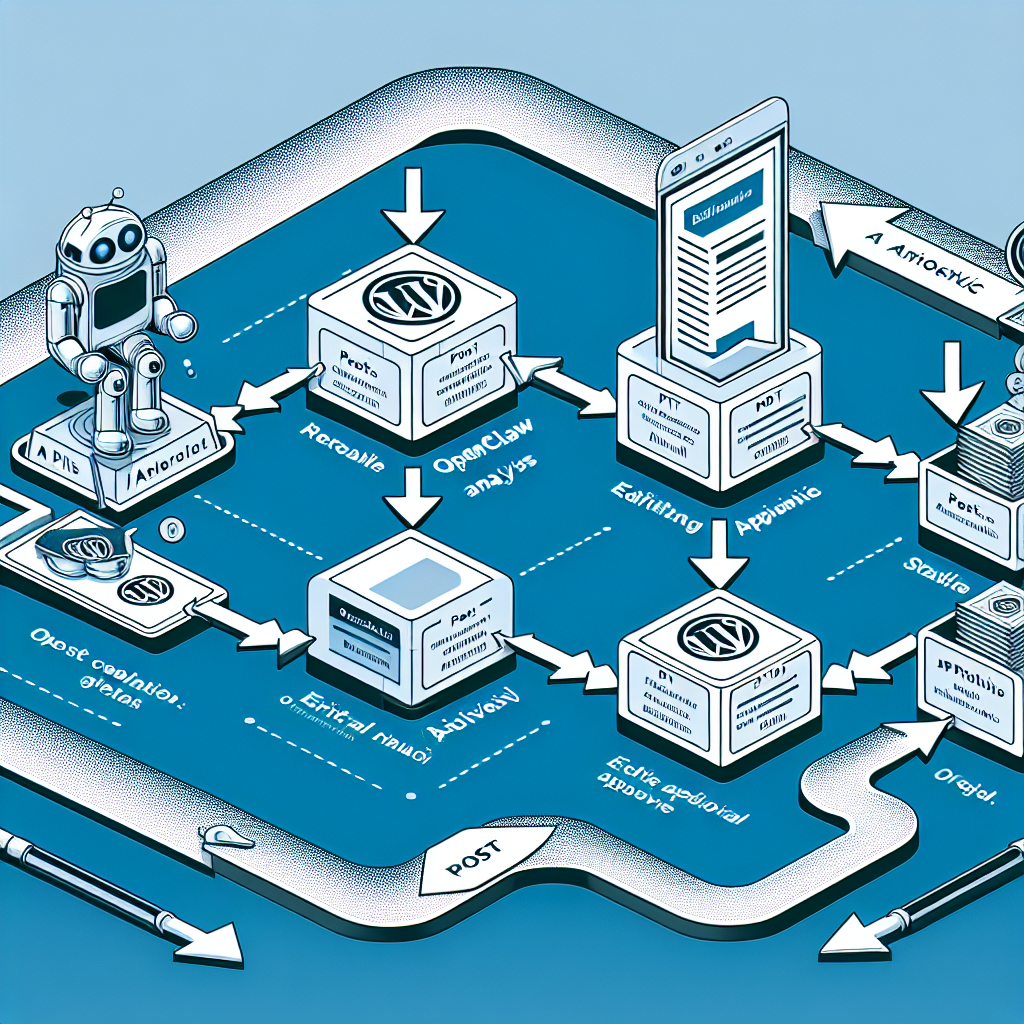
Implementing automated content QA with OpenClaw involves several interconnected components:
- Content Ingestion and Analysis: Capturing new or updated content via WordPress hooks or REST API triggers.
- AI-Powered Review Engine: Using OpenClaw AI agents to analyze text for errors, style deviations, and compliance issues.
- Rule-Based Enforcement: Applying configurable editorial and legal rules to classify and flag content.
- Reporting and Notifications: Delivering actionable insights to editors or automatically blocking non-compliant posts.
Step 1: Integrating Content Triggers in WordPress
To automate content QA, OpenClaw agents must be notified whenever relevant content changes occur. This can be achieved by hooking into WordPress action hooks such as save_post, wp_insert_post, or custom post type events.
add_action('save_post', function($post_id) {
  // Skip autosaves and revisions
  if (wp_is_post_autosave($post_id) || wp_is_post_revision($post_id)) {
    return;
  }
  // Trigger OpenClaw AI review
  openclaw_ai_trigger_content_review($post_id);
});
This setup ensures that every new or updated post is queued for AI-driven analysis.
Step 2: Configuring the OpenClaw AI Review Engine
The core of automated QA is the OpenClaw AI analysis pipeline. This involves sending the post content to an AI agent configured with customized language models and compliance checklists.
For example, an AI prompt might include instructions to:
- Check for spelling and grammar errors.
- Assess tone and style consistency based on brand guidelines.
- Identify potentially sensitive or restricted content (e.g., personal data, unverified claims).
- Validate required legal disclaimers or disclosures are present.
The AI agent returns a structured JSON report summarizing findings, which can be parsed to determine if the content passes or requires editorial intervention.
Step 3: Implementing Rule-Based Enforcement
Beyond AI detection, OpenClaw supports rule-based policies that define thresholds and actions. For instance:
- If grammar errors exceed 5, mark content as needing review.
- If prohibited keywords are detected, block publishing and notify moderators.
- If GDPR-related personal data is found without consent statements, flag for compliance review.
These rules are typically implemented as part of the OpenClaw agent’s decision logic or as separate WordPress filters that interpret the AI report.
Step 4: Reporting and Notifications
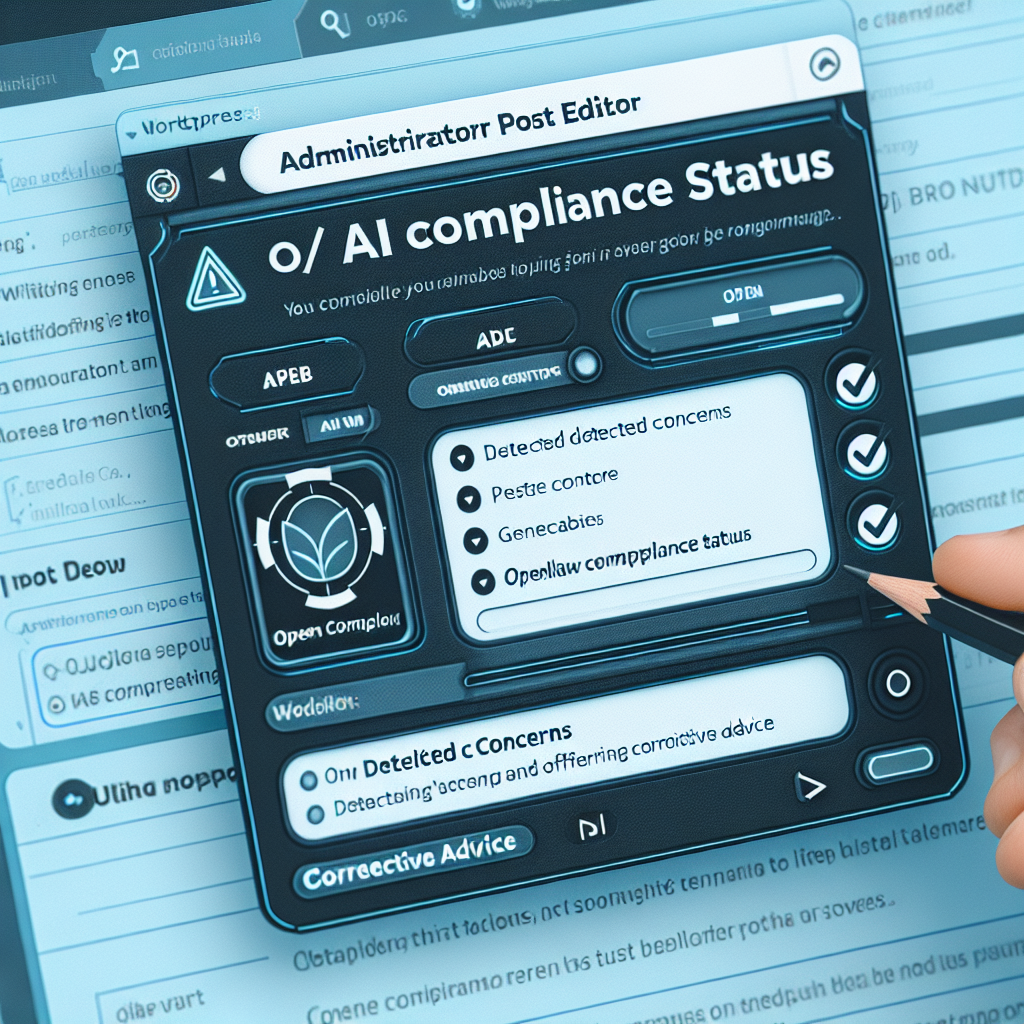
Once content is analyzed, OpenClaw can automatically update post metadata with QA status, generate editorial task lists, or send notifications via email, Slack, or WhatsApp integrations.
Example notification flow:
- Content flagged as non-compliant triggers an email to the editorial team with detailed AI findings.
- Passes content is auto-published or scheduled.
- Audit logs are maintained to track changes and approvals for regulatory audits.
Practical Implementation Example: Automating Compliance for Sponsored Content
Sponsored posts require strict adherence to FTC guidelines, including clear disclosure statements. Automating this process improves consistency and reduces legal risk.
// Sample AI prompt snippet for sponsored content check
"Check this article for presence and visibility of FTC sponsorship disclosures. Flag if missing or unclear."
OpenClaw agents scan new posts tagged as “sponsored” and ensure disclosures appear in the first 100 words. If missing, the system blocks publishing and sends a notification to the content manager.
Advanced Techniques: Continuous Learning and Feedback Loops
To improve accuracy over time, implement feedback mechanisms where editors can:
- Confirm or override AI findings.
- Provide examples of false positives or new compliance scenarios.
- Train custom AI models with updated editorial policies.
OpenClaw supports incremental training and adaptive rule updates, enabling the system to evolve with changing business needs or regulations.
Scaling Content QA Automation Across Multi-Site WordPress Networks
For agencies or businesses managing multiple WordPress sites, OpenClaw’s centralized AI orchestration allows unified content quality standards. Key steps include:
- Deploying a central OpenClaw AI server to process content from all sites via REST API.
- Configuring site-specific and global QA rules within the OpenClaw dashboard.
- Aggregating compliance reports for enterprise-level oversight.
Best Practices and Pitfalls to Avoid
- Balance automation with human oversight: Use AI to augment editors, not replace them entirely.
- Regularly update compliance rules: Laws and guidelines evolve; maintain your AI prompt and rule sets accordingly.
- Monitor false positives: Tune AI sensitivity to avoid excessive blocking or unnecessary alerts.
- Ensure data privacy: When scanning content, respect user data and comply with privacy regulations.
Conclusion
Automating content quality assurance and compliance with OpenClaw AI agents empowers WordPress site owners to maintain high editorial standards, improve legal adherence, and streamline publishing workflows. By integrating AI-powered analysis, rule-based enforcement, and actionable reporting, businesses can confidently scale content production without sacrificing quality or risking compliance violations.
In the next installment, we will explore leveraging OpenClaw AI agents for automated multilingual content localization and SEO optimization, further expanding your WordPress automation capabilities.