


OpenClaw AI Automation: Implementing Robust AI Monitoring and Incident Response for Business Continuity (Part 5)
March 10, 2026OpenClaw AI Automation: Advanced Custom Workflow Creation and AI Agent Collaboration (Part 7)
March 11, 2026Introduction
Building upon previous discussions around scaling, orchestration, and monitoring in OpenClaw AI Automation, this installment focuses on an increasingly critical dimension—security and compliance. Businesses today face growing regulatory requirements and cybersecurity threats. Integrating AI-driven governance within your OpenClaw automation framework empowers you to proactively manage risks, maintain compliance, and safeguard your digital assets.
Why Security and Compliance Matter in AI Automation
Automating business tasks with AI agents like OpenClaw streamlines operations but also introduces potential vulnerabilities. Automated processes can inadvertently violate data privacy laws, expose sensitive information, or be exploited by malicious actors if not carefully guarded. Ensuring robust security and compliance isn’t just about avoiding penalties—it’s about preserving customer trust and business continuity.
Key Compliance Frameworks Relevant to AI Automation
- GDPR: Governs personal data protection for EU citizens; mandates data minimization, consent, and breach notifications.
- CCPA: California Consumer Privacy Act focuses on consumer data rights in the US.
- HIPAA: Protects sensitive health data in healthcare-related automation.
- PCI DSS: Applies to payment processing and financial data security.
OpenClaw deployments should be designed to respect and enforce these regulatory requirements through policy automation and audit readiness.
Implementing AI-Driven Security Governance in OpenClaw
OpenClaw’s architecture supports modular AI agents that can be customized and extended. This flexibility allows you to implement dedicated security and compliance agents that monitor, enforce, and report on governance policies.
1. Policy Definition and Automation
Start by codifying your security policies and compliance controls into machine-readable rules. For example, define data access restrictions, encryption requirements, or retention periods as formal policies.
OpenClaw agents can then be configured to enforce these policies automatically. For instance, an AI agent can scan data flows within your workflows to detect unencrypted transmissions or unauthorized data sharing and block or flag these activities.
2. Continuous Compliance Monitoring
Integrate dedicated monitoring agents that continuously assess your AI automation environment against compliance benchmarks. These agents can perform:
- Real-time logging of data access and processing activities
- Automated checks for policy violations or suspicious behavior
- Alerts and escalation workflows when anomalies are detected
For example, an OpenClaw agent monitoring your WordPress site’s user data access can alert IT teams if an unusual download pattern suggests a potential data breach.
3. Automated Incident Response
Security incidents require swift action to mitigate damage. OpenClaw AI agents can be programmed with incident response playbooks that trigger automatically upon threat detection.
This might include isolating compromised systems, revoking suspicious user sessions, or activating backup protocols. Automating these responses reduces reaction time and limits the impact of breaches.
4. Audit and Reporting Automation
Compliance audits are resource-intensive. OpenClaw can simplify audits by generating comprehensive, timestamped reports of all security-related activities and policy enforcement actions.
These reports facilitate internal reviews and satisfy external auditors, enabling transparent governance.
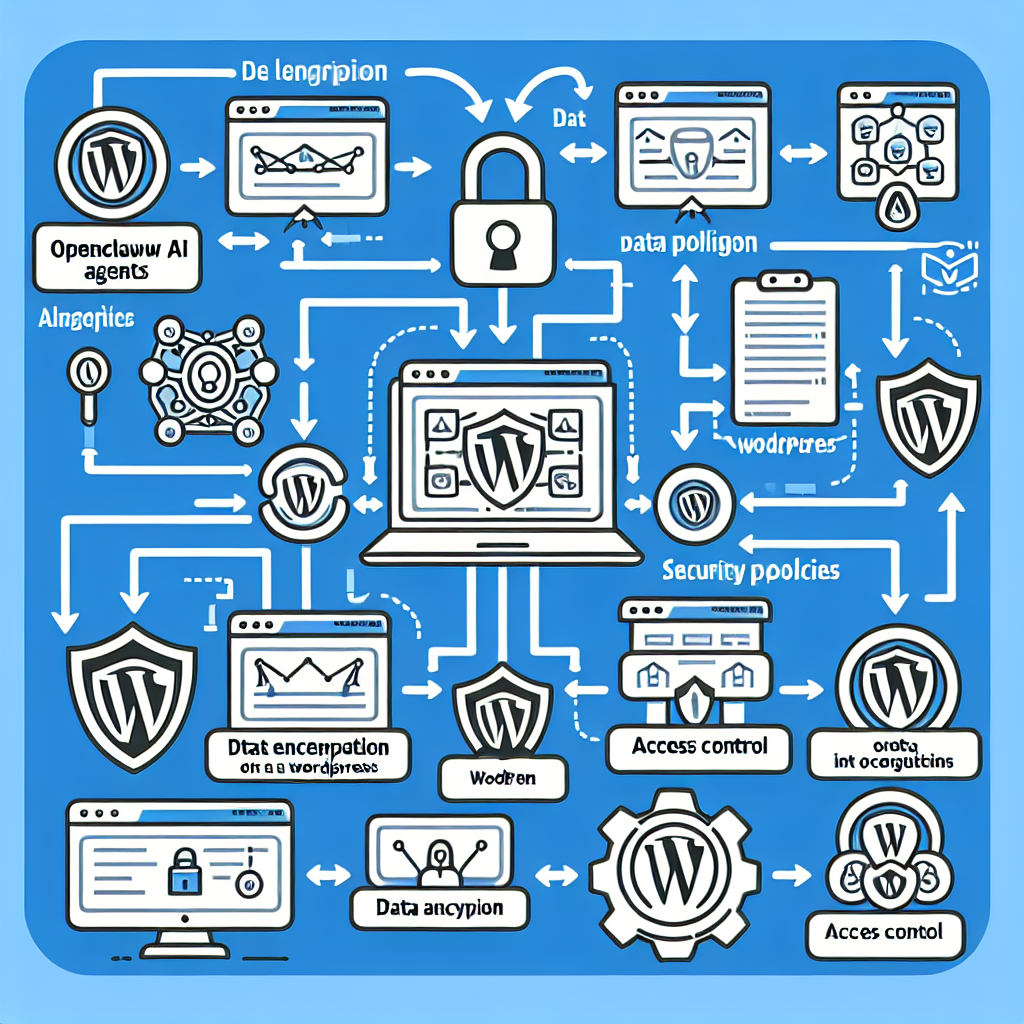
Practical Example: Securing a WordPress Site with OpenClaw AI Agents
Consider a small business running a WordPress site that handles customer registrations and processes payments. Here’s how OpenClaw can enhance its security and compliance:
- Data Encryption Enforcement: An OpenClaw agent monitors all form submissions to ensure HTTPS is used and sensitive fields are encrypted before database storage.
- Access Control: AI agents monitor admin login attempts, blocking IPs exhibiting brute-force behavior and sending alerts to administrators.
- GDPR Compliance: Automated workflows handle user data deletion requests, ensuring all personal data is purged across integrated systems.
- Audit Logs: All activities related to user data access and changes are logged and compiled into weekly reports for compliance verification.
This layered approach combines proactive defense with automated policy enforcement, minimizing human error and manual overhead.
Designing OpenClaw Security Agents: Best Practices
- Modularity: Design security agents as modular components so they can be updated or replaced without disrupting other workflows.
- Least Privilege: Configure agents and automation workflows with the minimum permissions necessary to perform their tasks.
- Logging and Transparency: Enable detailed logging for all security-related decisions and actions to support auditability.
- Fail-Safe Defaults: In the event of uncertainty or failure, agents should default to the safest state—e.g., blocking access rather than allowing it.
- Regular Updates: Keep AI models and rulesets updated to adapt to emerging threats and regulatory changes.
Integrating OpenClaw AI Governance with Existing Security Tools
OpenClaw’s API-driven design allows it to complement and extend existing security infrastructures rather than replace them. For example:
- SIEM Integration: OpenClaw agents can feed security events into centralized Security Information and Event Management (SIEM) platforms for holistic threat analysis.
- Identity and Access Management (IAM): Automation workflows can synchronize with IAM systems to enforce dynamic access policies.
- Vulnerability Scanners: Agents can trigger scans and automatically apply patches or configuration changes based on scan results.
This interoperability maximizes security coverage and operational efficiency.
Challenges and Considerations
Implementing AI-driven security governance is not without challenges:
- False Positives and Negatives: AI agents must be finely tuned to minimize erroneous alerts or missed threats.
- Data Privacy: Security monitoring must itself comply with privacy regulations—avoid excessive data collection.
- Complexity: Overly complex governance rules can hinder agility; strive for balance.
- Human Oversight: Maintain human-in-the-loop for critical decisions to ensure accountability.
Conclusion
Security and compliance are foundational to sustainable AI automation. With OpenClaw, business owners and technical operators gain powerful tools to embed robust governance into their workflows. By automating policy enforcement, continuous monitoring, incident response, and auditing, organizations can confidently scale AI-driven operations while safeguarding data and meeting regulatory obligations.
In the next part of this series, we will explore advanced customization techniques to tailor OpenClaw AI agents for niche business needs, unlocking even greater automation potential.
Further Reading and Resources
- OpenClaw AI Automation: Leveraging Data Pipelines and Workflow Orchestration for Smarter Business Automation Part 4
- OpenClaw AI Automation: Implementing Robust AI Monitoring and Incident Response for Business Continuity Part 5
- How Small Businesses Can Use AI Agents to Cut Support Load in 7 Days Read More