


OpenClaw AI Automation: Implementing AI-Driven Content Personalization and Dynamic User Experiences for WordPress (Part 24)
March 23, 2026
OpenClaw AI Automation: Implementing AI-Driven Automated Backup and Disaster Recovery Strategies for WordPress (Part 26)
March 24, 2026Introduction
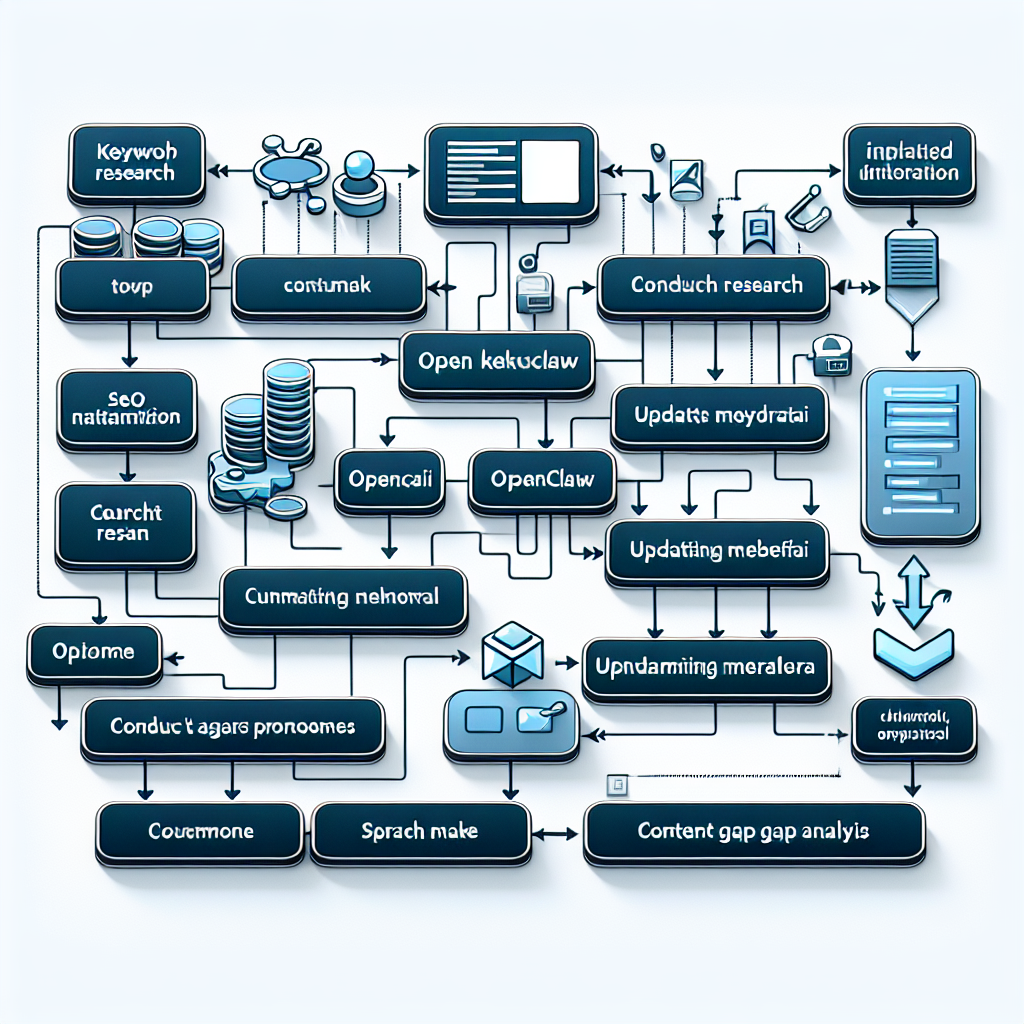
As search engine optimization (SEO) grows ever more complex, integrating AI-driven automation through OpenClaw offers powerful ways to optimize WordPress websites efficiently. This part of the series explores practical implementations of AI-powered automated SEO strategies that business owners and technical operators can deploy to enhance their WordPress site’s search visibility. We will cover how OpenClaw AI agents can perform keyword research, optimize on-page SEO elements, analyze content gaps, and track SEO performance in real time.
Why Automate SEO with OpenClaw AI Agents?

Traditional SEO requires continuous manual effort—researching keywords, auditing content, updating metadata, and monitoring rankings. OpenClaw AI agents can automate these repetitive and data-driven tasks, providing several benefits:
- Efficiency: AI agents process large volumes of data faster than humans.
- Consistency: Automated workflows reduce human error and maintain SEO best practices.
- Real-time Adaptability: Agents can respond dynamically to ranking changes or algorithm updates.
- Scalability: Automation supports managing multiple sites or pages simultaneously.
Integrating these capabilities into WordPress via OpenClaw streamlines SEO, freeing technical operators to focus on strategic improvements.
Implementing AI-Driven Keyword Research
Overview
Keyword research is foundational to SEO. OpenClaw AI agents can automate this by analyzing search trends, competitor keywords, and user intent.
Step-by-Step Implementation
- Data Collection: The AI agent uses APIs like Google Trends, SEMrush, or Ahrefs to gather keyword data relevant to your niche.
- Semantic Analysis: Natural language processing (NLP) models analyze search queries to understand intent and group related keywords.
- Ranking Opportunity Scoring: Keywords are scored based on search volume, competition, and relevance.
- Keyword Suggestions: The agent generates prioritized keyword lists tailored for different content types (blog posts, product pages, landing pages).
- Integration with WordPress: The agent automatically tags and categorizes content drafts with relevant keywords for editors.
Practical Example
Suppose a WordPress site in the eco-friendly products niche wants to expand its blog. The OpenClaw agent fetches keywords such as “biodegradable packaging,” “sustainable shipping solutions,” and “eco-friendly product certifications.” It scores these based on search volume and low competition, then suggests which to target for new posts and updates existing content tags accordingly.
Automated On-Page SEO Optimization
Core Concepts
On-page SEO involves optimizing title tags, meta descriptions, header tags, image alt attributes, internal linking, and URL structures. OpenClaw AI agents can audit and enhance these elements automatically.
Implementation Techniques
- Metadata Generation: AI generates SEO-friendly title tags and meta descriptions using content summaries and targeted keywords.
- Header Tag Optimization: The agent analyzes content headings for keyword inclusion and logical structure, adjusting as needed.
- Image Optimization: AI extracts relevant alt text from images and context to improve accessibility and SEO.
- Internal Linking Suggestions: Leveraging a site taxonomy graph, the agent recommends internal links to related posts to improve crawlability and user engagement.
- URL Structure Checks: The agent identifies URLs that are too long or non-descriptive and suggests SEO-friendly alternatives.
Integration Example
An AI agent scans a WordPress product page about “organic cotton t-shirts” and generates a concise meta description including the keyword. It restructures headers to include “Benefits of Organic Cotton T-Shirts” and adds internal links to related blog posts about sustainable fabrics.
Content Gap Analysis and Recommendations
OpenClaw AI agents can perform content gap analysis by comparing your WordPress site’s content against competitor sites and top-ranking pages.
Process Overview
- Competitor Content Crawl: The AI agent crawls competitor URLs in your niche, extracting topics and keywords.
- Content Mapping: It maps your existing content to these topics, identifying missing or underrepresented areas.
- Gap Scoring: Content gaps are scored by potential traffic impact and relevance.
- Actionable Recommendations: The agent generates a prioritized list of new content ideas or updates to fill gaps.
This allows business owners to strategically focus content creation where it will have the highest SEO return.
Real-Time SEO Performance Tracking and Alerts
Why Real-Time Tracking Matters
SEO is dynamic; rankings fluctuate due to algorithm updates, competitor actions, or site changes. OpenClaw AI agents can monitor your WordPress site’s SEO health continuously, alerting you to issues promptly.
Key Features
- Ranking Monitoring: Track keyword rankings daily with visual dashboards.
- Site Health Audits: Automated checks for broken links, slow page load times, or missing metadata.
- Alert System: Real-time notifications via email or Slack when critical SEO issues arise.
- Performance Reports: Weekly or monthly reports summarizing improvements and regressions.
Example Implementation
An OpenClaw agent integrated into WordPress detects a sudden drop in rankings for “eco-friendly packaging solutions.” It scans the page and identifies a recent plugin conflict causing slow page loads. The agent alerts the technical team with a detailed report and recommended fixes.
Technical Implementation Details
OpenClaw AI Agent Workflow for SEO Automation
The typical workflow involves the following components:
- Data Ingestion Module: Connects to external SEO APIs, web crawlers, and WordPress REST API.
- Processing Engine: Executes NLP models, ranking algorithms, and semantic analysis using Python or Node.js.
- WordPress Integration Layer: Uses authenticated REST API calls to retrieve and update content metadata, tags, and internal links.
- Dashboard & Alerts: Webhooks and notification services push real-time updates to site admins.
Sample Code Snippet for Metadata Update
const axios = require('axios');

async function updateMetaData(postId, title, description, token) {
  const url = `https://yourwordpresssite.com/wp-json/wp/v2/posts/${postId}`;
  const data = {
    title: title,
    meta: { description: description }
  };

  const headers = {
    'Authorization': `Bearer ${token}`,
    'Content-Type': 'application/json'
  };

  try {
    const response = await axios.post(url, data, { headers });
    console.log('Meta updated for post:', postId);
  } catch (error) {
    console.error('Failed to update meta:', error);
  }
}
This snippet shows how an AI agent could programmatically update post titles and meta descriptions using the WordPress REST API.
Challenges and Best Practices
Data Privacy and API Limits
Ensure compliance with data privacy laws when collecting keyword or competitor data. Also, be mindful of API rate limits to avoid disruptions.
Human Review and Overrides
While automation accelerates SEO tasks, human oversight remains crucial to maintain brand voice and quality control.
Continuous Model Training
SEO trends evolve; regularly update AI models with fresh data to maintain accuracy.
Fallback Mechanisms
Implement fallback procedures if AI agents encounter errors to prevent site disruptions.
Conclusion
OpenClaw AI automation unlocks powerful new capabilities for automating complex SEO strategies on WordPress websites. By implementing AI-driven keyword research, on-page optimization, content gap analysis, and real-time performance tracking, business owners and technical operators can significantly improve search rankings with reduced manual effort. The integration of OpenClaw agents facilitates scalable, adaptive, and data-driven SEO workflows that keep pace with the dynamic search landscape.
In the next part of this series, we will explore how to combine AI-driven SEO with personalized content delivery to further enhance user engagement and conversion rates.