

OpenClaw AI Automation: Implementing Intelligent AI Agent Feedback Loops for Continuous Improvement (Part 10)
March 13, 2026
OpenClaw AI Automation: Designing Adaptive AI Agent Feedback Loops for Dynamic Business Environments (Part 11)
March 14, 2026Introduction
In the previous installment of this series, we delved into implementing intelligent AI agent feedback loops to enable continuous improvement in OpenClaw AI automation. Part 10 laid the foundation for collecting and analyzing agent outputs, user interactions, and performance metrics. This article, Part 11, advances that discussion by focusing on designing adaptive feedback loops. These loops dynamically adjust AI agent behavior in response to changing business environments, customer preferences, and operational conditions.
Why Adaptive Feedback Loops Matter in Business Automation
Static feedback loops provide valuable insights and incremental improvements, but they have limitations when business contexts shift rapidly. Adaptive feedback loops empower AI agents to:
- Respond in real-time to new data and unexpected scenarios.
- Personalize interactions based on evolving customer behavior and preferences.
- Maintain resilience despite external disruptions such as seasonal trends, market changes, or technical incidents.
- Optimize resource allocation by prioritizing workflows dynamically.
Incorporating these capabilities into OpenClaw AI agents maximizes ROI and creates a sustainable automation ecosystem.
Core Components of Adaptive Feedback Loops
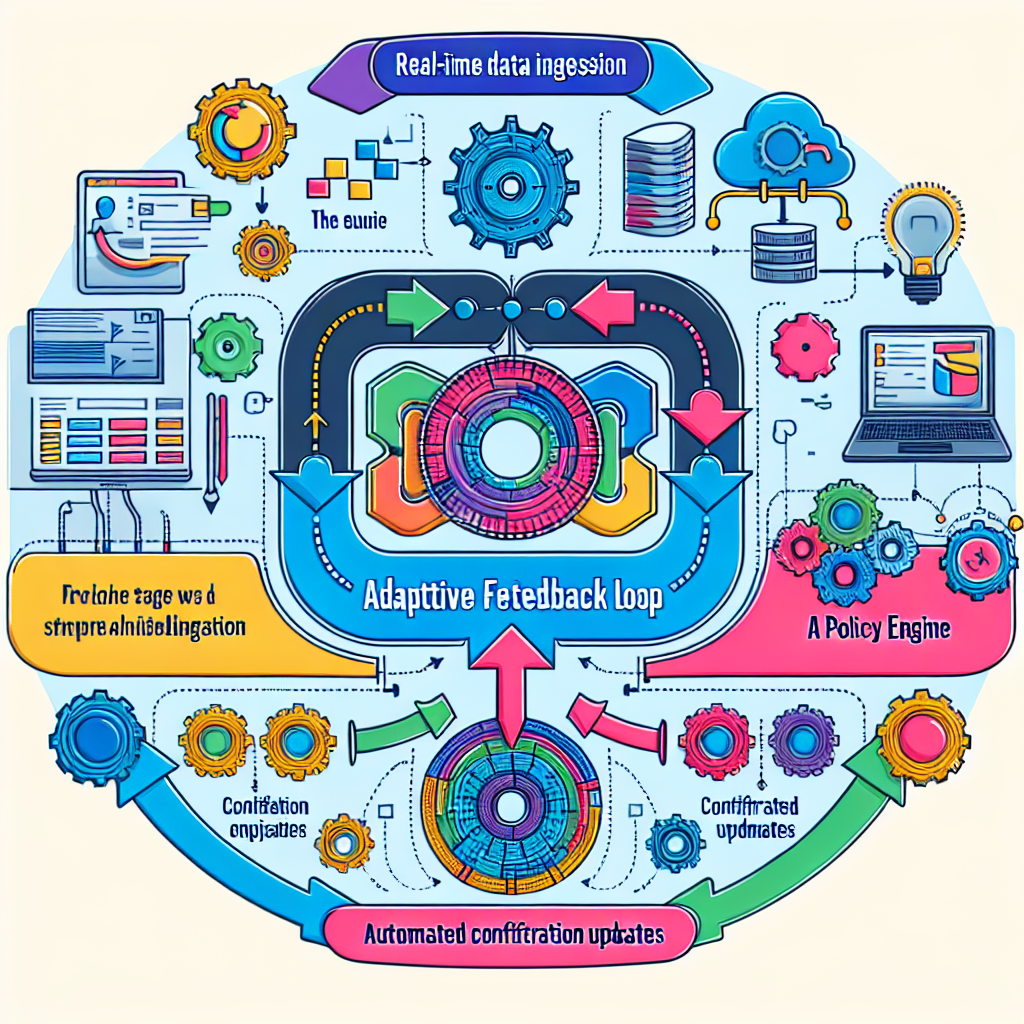
Building adaptive feedback loops requires integrating multiple components:
- Continuous Data Collection: Real-time ingestion from multiple sources including customer interactions, system logs, and external APIs.
- Contextual Analysis: Using AI models to detect patterns, trends, and anomalies that affect agent performance or business outcomes.
- Dynamic Policy Engine: Rules or ML models that decide how and when to adjust agent behavior or workflows.
- Automated Adjustment Mechanisms: APIs or scripts that update agent configurations, prompt templates, or task priorities without manual intervention.
- Monitoring & Alerting: To ensure adjustments improve performance and to catch degradation early.
Example: Adaptive Customer Support Chatbot Using OpenClaw
Consider a WordPress-based e-commerce site using OpenClaw AI agents to automate customer support via chat. During a holiday sale, the influx of order status queries spikes dramatically. An adaptive feedback loop would:
- Collect real-time chat volume and query types.
- Analyze that data to detect the surge and identify the most common questions.
- Adapt the chatbot’s priority to answer order status queries faster by loading specialized prompt templates focused on shipping updates.
- Temporarily increase AI resource allocation or parallel agent instances to handle load.
- Send alerts to human supervisors if wait times exceed thresholds.
- After the sale, revert to normal operation and update models with new data for future improvements.
Implementing Adaptive Feedback Loops with OpenClaw: Step-by-Step
1. Set Up Real-Time Data Pipelines
Begin by integrating data sources relevant to your AI agents’ tasks. For WordPress environments, this might include:
- WooCommerce order and customer activity logs
- Live chat transcripts from platforms like WhatsApp, Messenger, or native chat widgets
- Server and application performance metrics
Use tools like Logstash or RudderStack to ingest and stream data into a central analytics platform or data lake.
2. Deploy Contextual AI Models for Pattern Recognition
Employ AI models capable of natural language understanding, anomaly detection, and trend analysis. For example:
- Use OpenAI models fine-tuned to classify support ticket types and sentiment.
- Leverage time series forecasting models to predict traffic surges.
- Apply clustering algorithms to group similar customer issues.
This step transforms raw data into actionable intelligence.
3. Build a Dynamic Policy Engine
The policy engine encodes business rules and decision-making logic. It can be implemented using:
- Rule-based systems: For example, if chat volume > 100/hour and 50% queries are order-related, then boost order status prompt priority.
- Reinforcement learning: Agents learn optimal adjustments based on reward feedback.
- Hybrid approaches: Combining heuristics with ML predictions for robust flexibility.
4. Automate Agent Configuration Updates
Use OpenClaw’s APIs or scripting capabilities to apply changes automatically. Examples include:
- Switching prompt templates dynamically based on detected context.
- Adjusting agent task queues or priority weights.
- Spinning up additional agent instances or throttling back.
Automation eliminates latency between detection and response.
5. Monitor and Iterate
Implement dashboards and alerting tools like Grafana or Kibana to track:
- Agent response times and resolution rates
- Customer satisfaction metrics
- System resource utilization
Use these insights to refine policy rules and AI models continuously.
Practical Considerations and Best Practices
Data Privacy and Compliance
Ensure data collection and processing comply with regulations such as GDPR or CCPA. Use anonymization and secure storage practices.
Fail-Safe Mechanisms
Adaptive loops should include fallback logic to prevent cascading failures or undesired agent behavior. For example, revert to default configurations if performance degrades.
Human-in-the-Loop Integration
Keep human supervisors in the loop for critical decisions or complex escalations. Provide interfaces for manual overrides and feedback.
Testing in Staging Environments
Test adaptive logic thoroughly in staging before production rollout to avoid surprises affecting customers.
Case Study: Adaptive AI Agent for WordPress Hosting Support
A managed WordPress hosting provider implemented adaptive feedback loops to automate AI-driven support for VPS issues. Key outcomes included:
- Automatic prioritization of urgent server alerts detected via real-time log analysis.
- Dynamic adjustment of AI diagnostic scripts based on common failure modes during traffic spikes.
- Reduced human escalations by 40% through timely and context-aware AI responses.
- Continuous learning from incident resolutions improved agent accuracy over 3 months.
This example highlights the tangible business value of adaptive feedback loops.
Summary and Next Steps
Adaptive AI agent feedback loops represent a powerful evolution in OpenClaw AI automation, enabling systems to dynamically optimize themselves in real-time. By integrating continuous data collection, contextual AI analysis, dynamic policy engines, and automated configuration updates, businesses can build resilient, personalized, and efficient automation workflows.
Next, Part 12 will explore multi-agent collaboration frameworks within OpenClaw, focusing on how adaptive feedback loops can facilitate seamless teamwork between specialized AI agents for complex business processes.